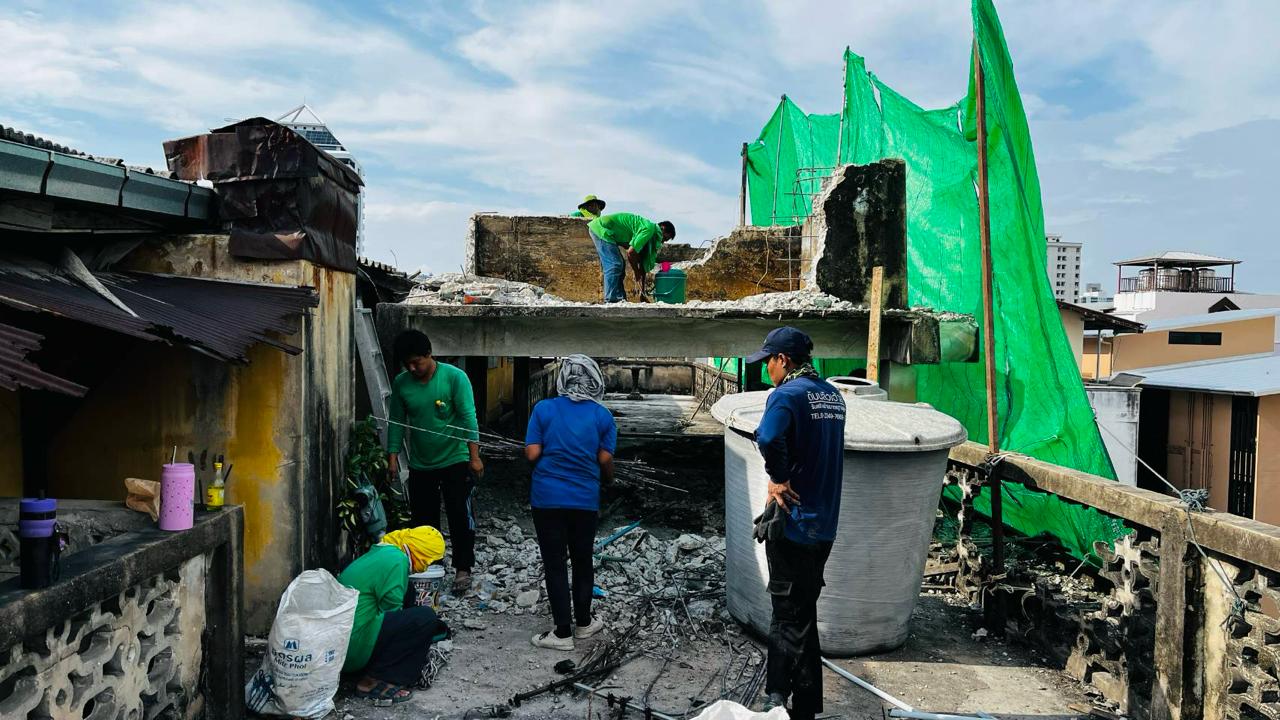
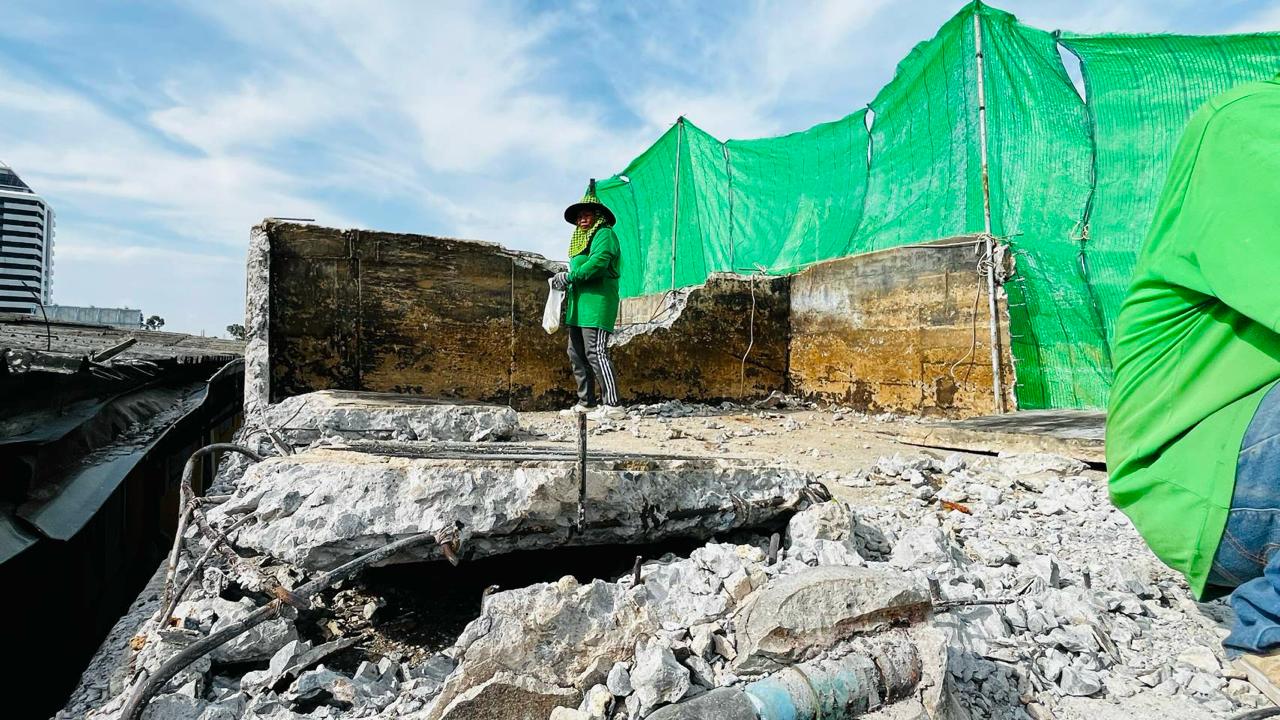
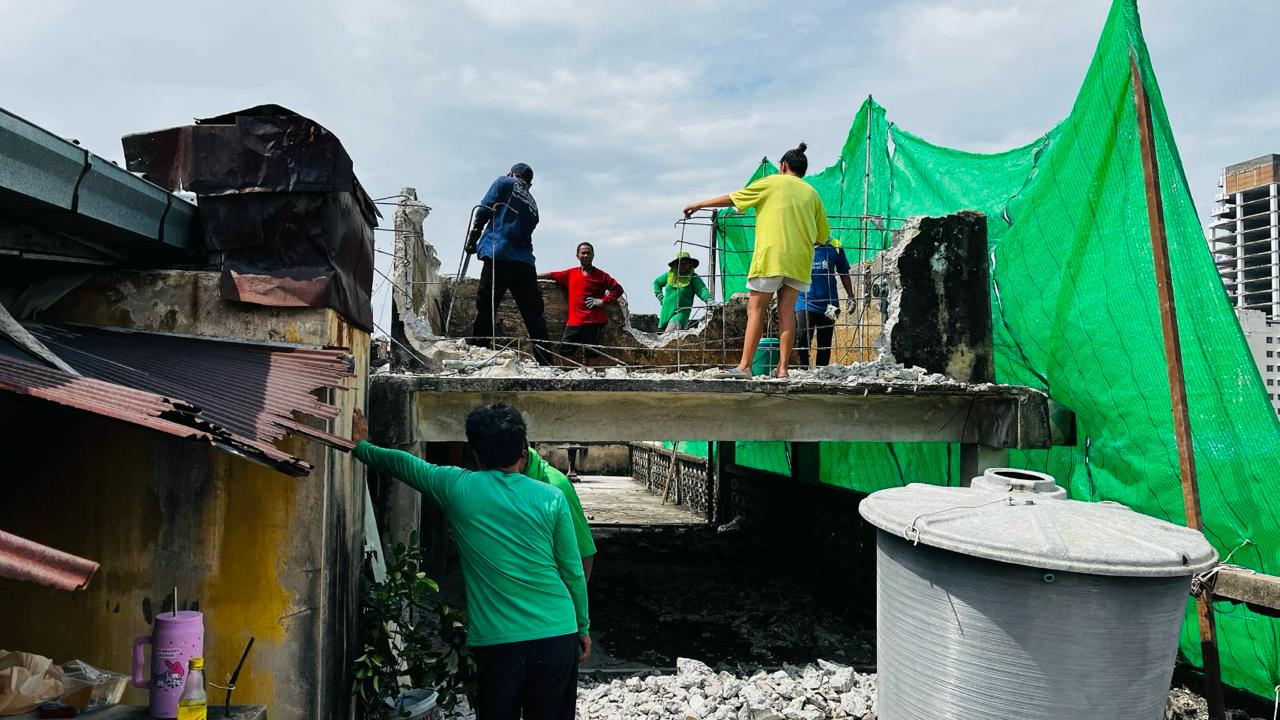
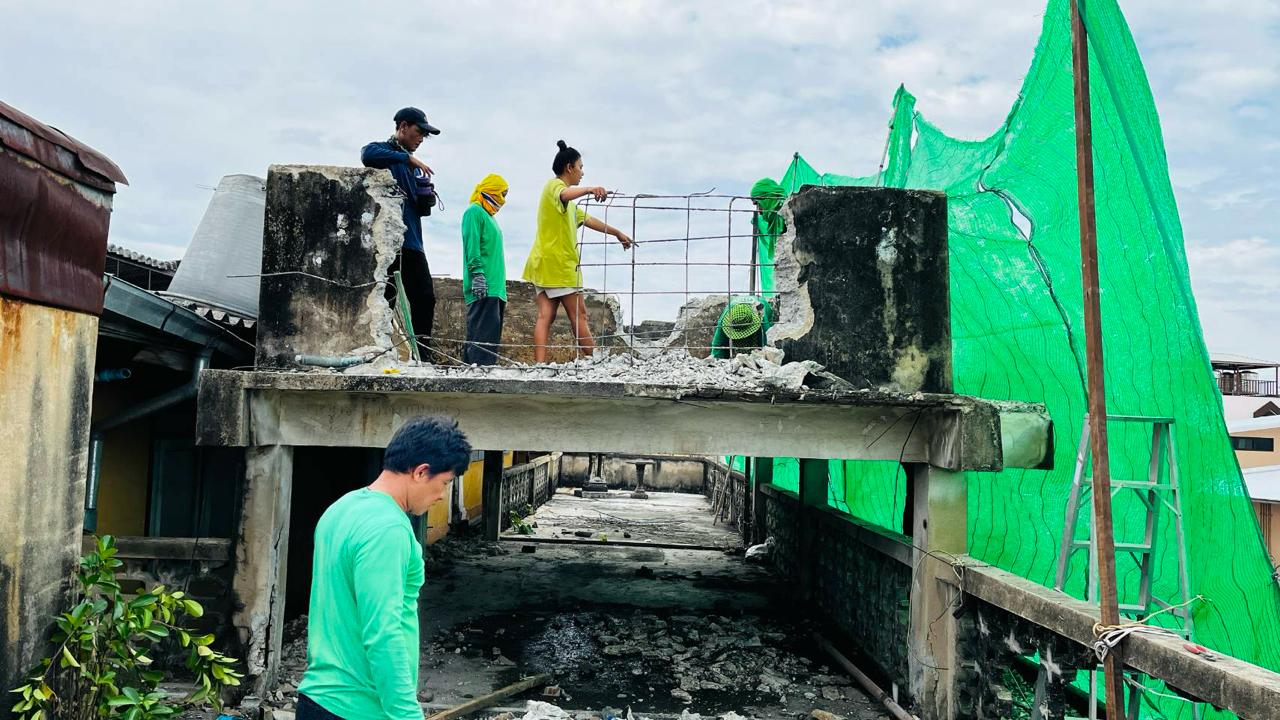
Follow the transformation of WITHIN as it takes shape in Ekkamai Soi 30.
WITHIN Ekkamai 30 is currently undergoing a full renovation and redevelopment, with completion targeted for Q4 2027. The project is not currently open or operational; work is ongoing across the planned residences, rooftop spaces, shared areas, and ground-floor levels.
This section documents construction progress, material selections, layout changes, rooftop development, interior fit-out, architectural updates, and the small decisions that shape the atmosphere of the building.
The goal is not only to show progress, but to openly document the transformation of the building from its original condition into a calmer mixed-use address in Bangkok.
Entry 10
15 September 2026 Ground-floor shophouses
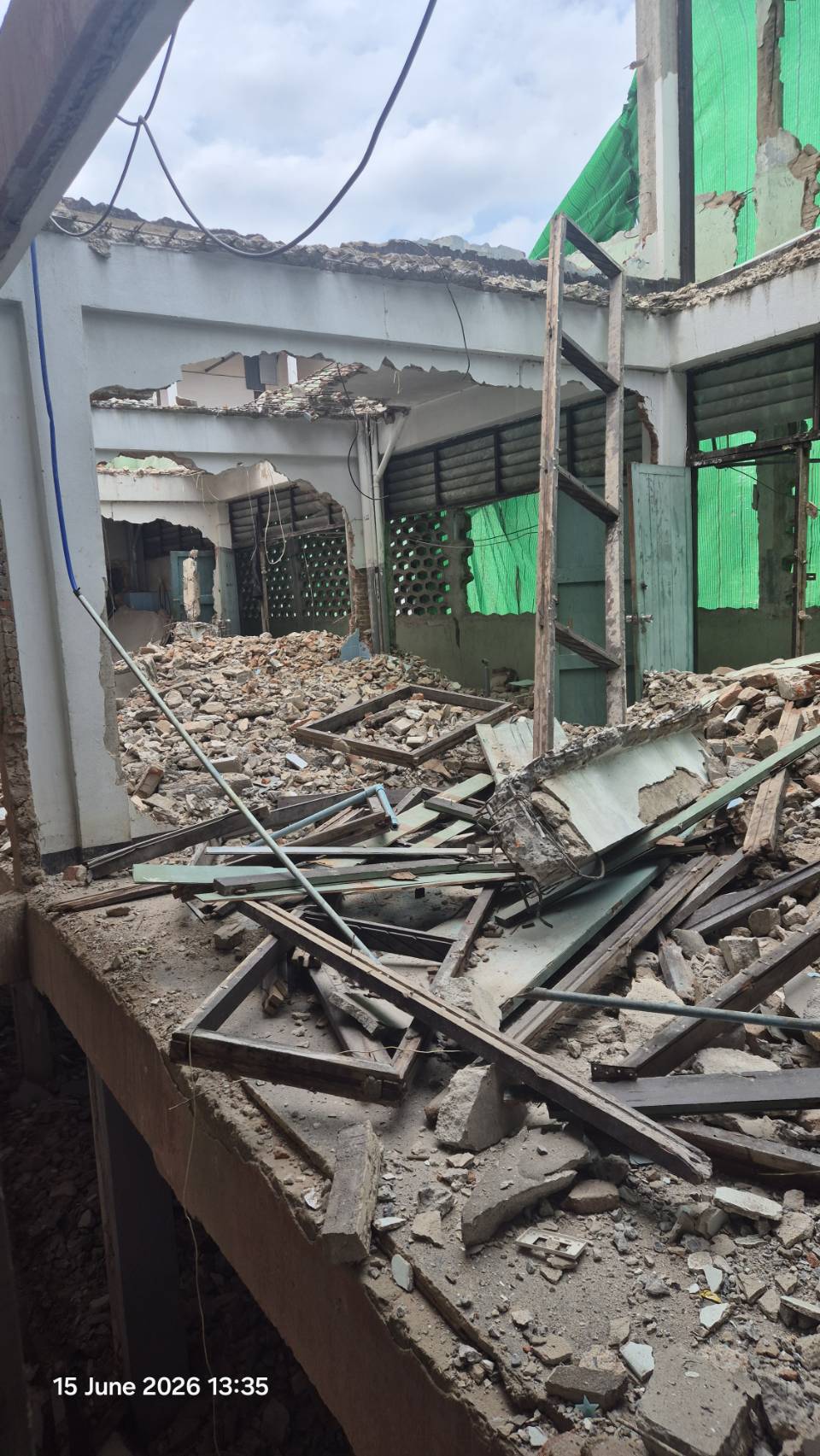
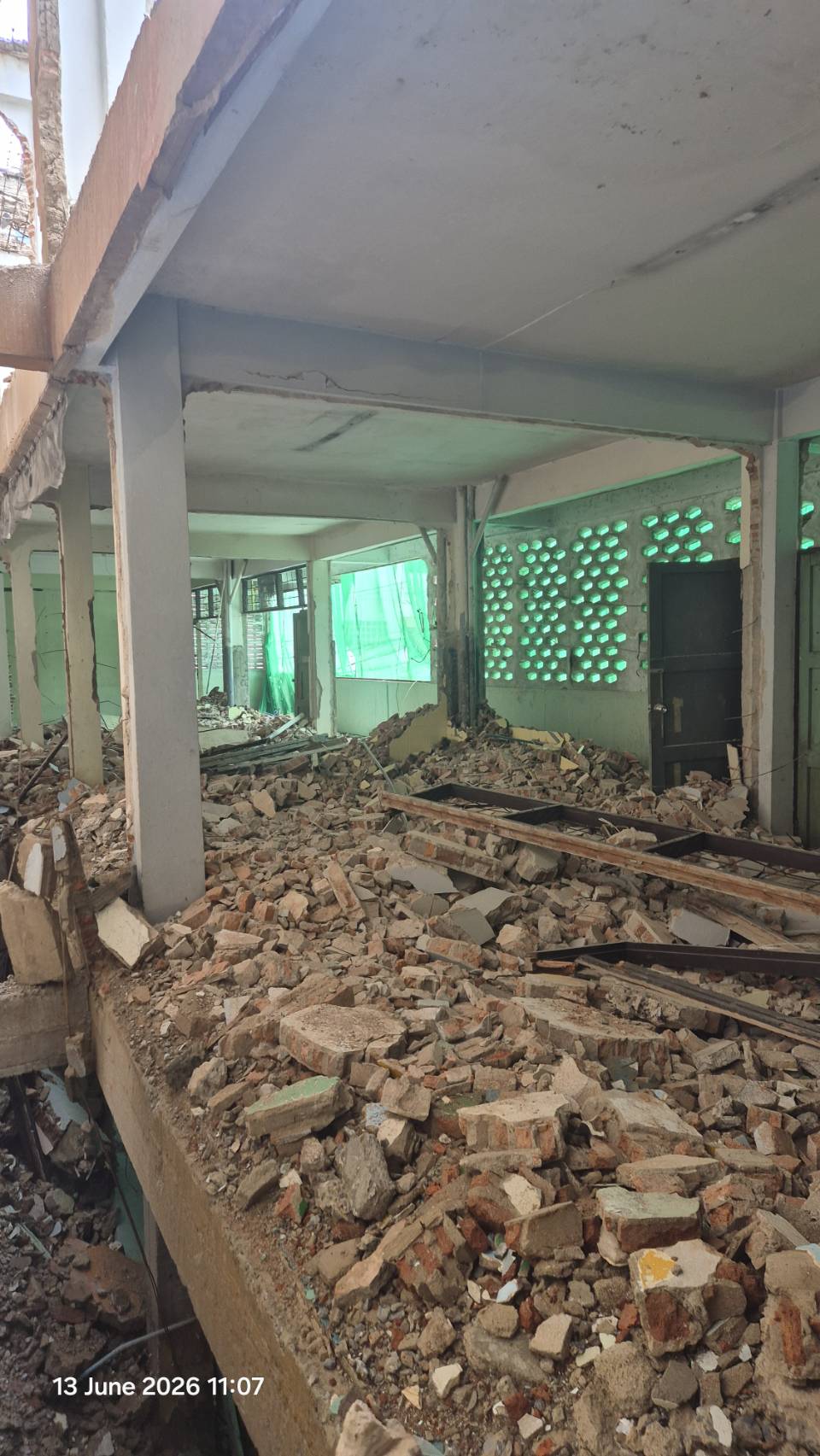
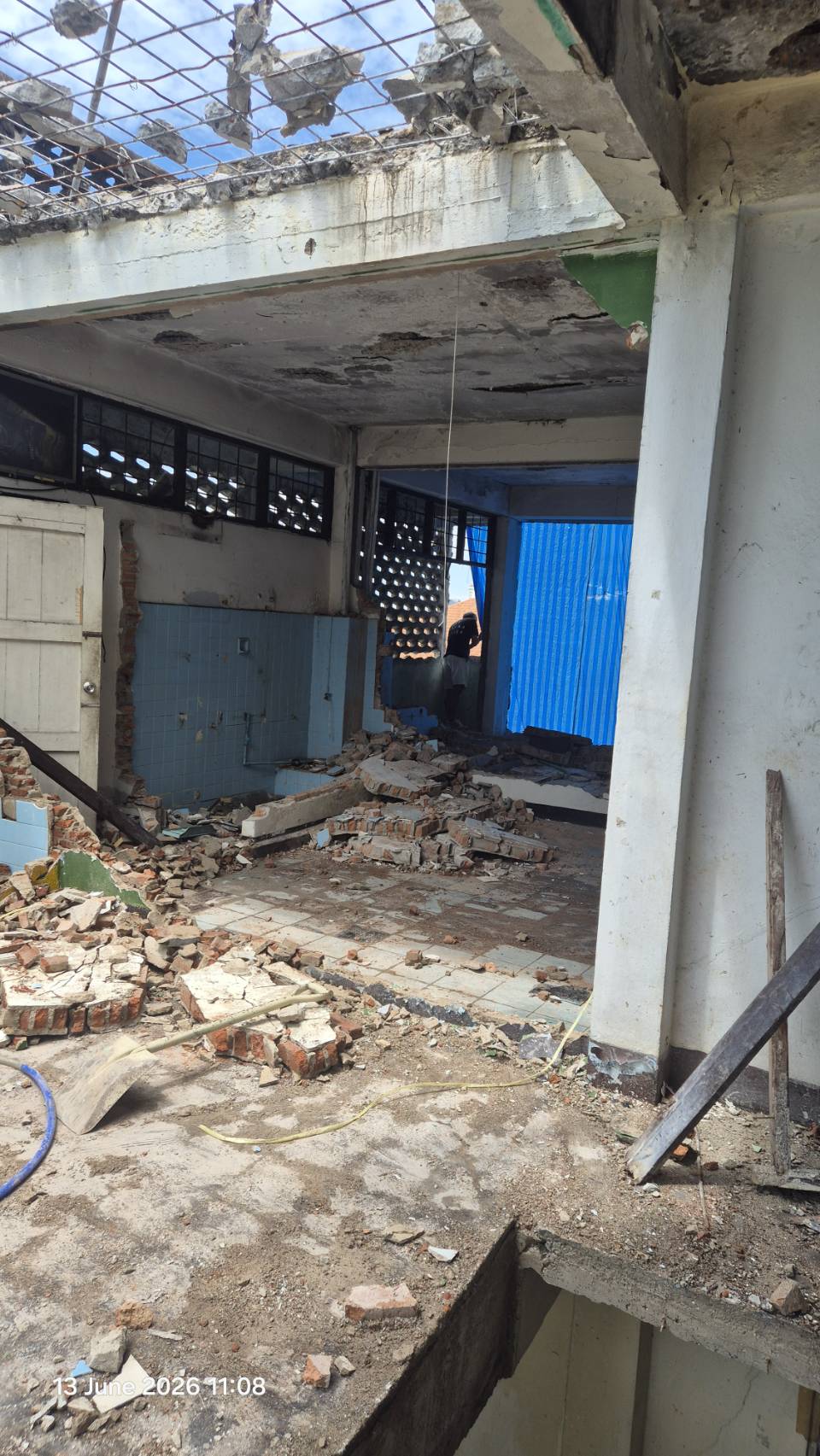
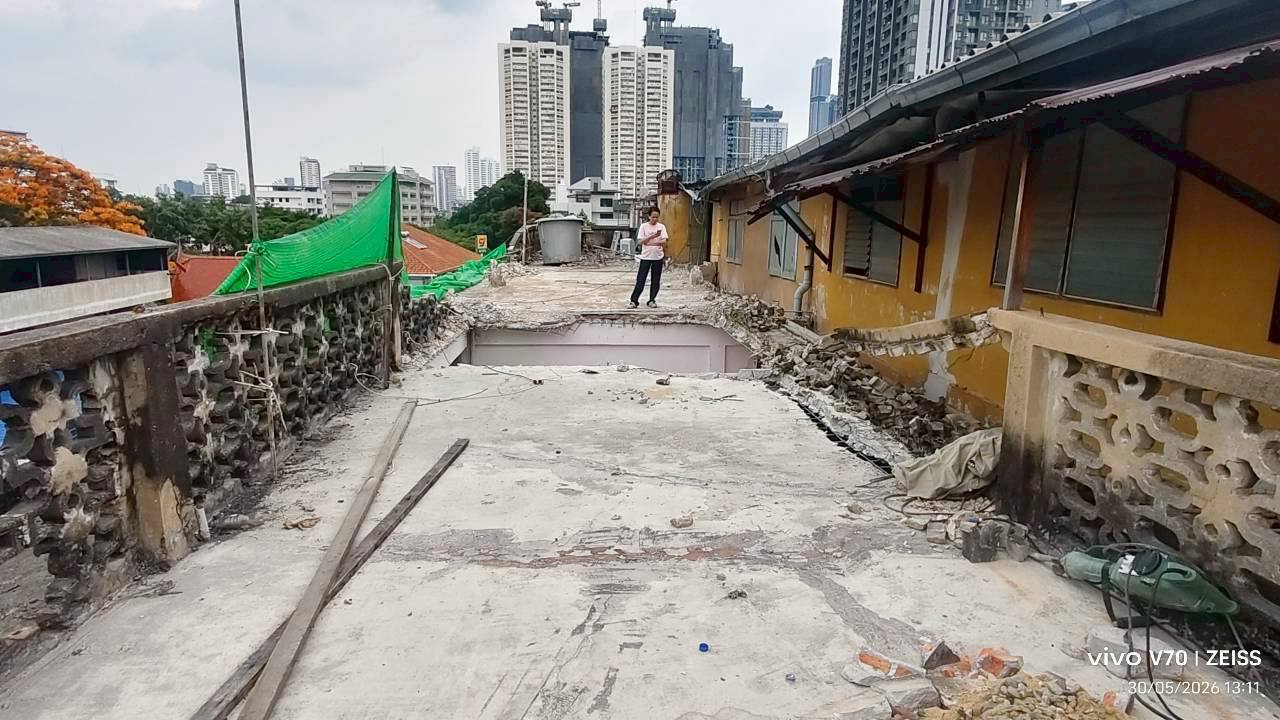
The ground-floor shophouses have now been stripped back to their essential structure.
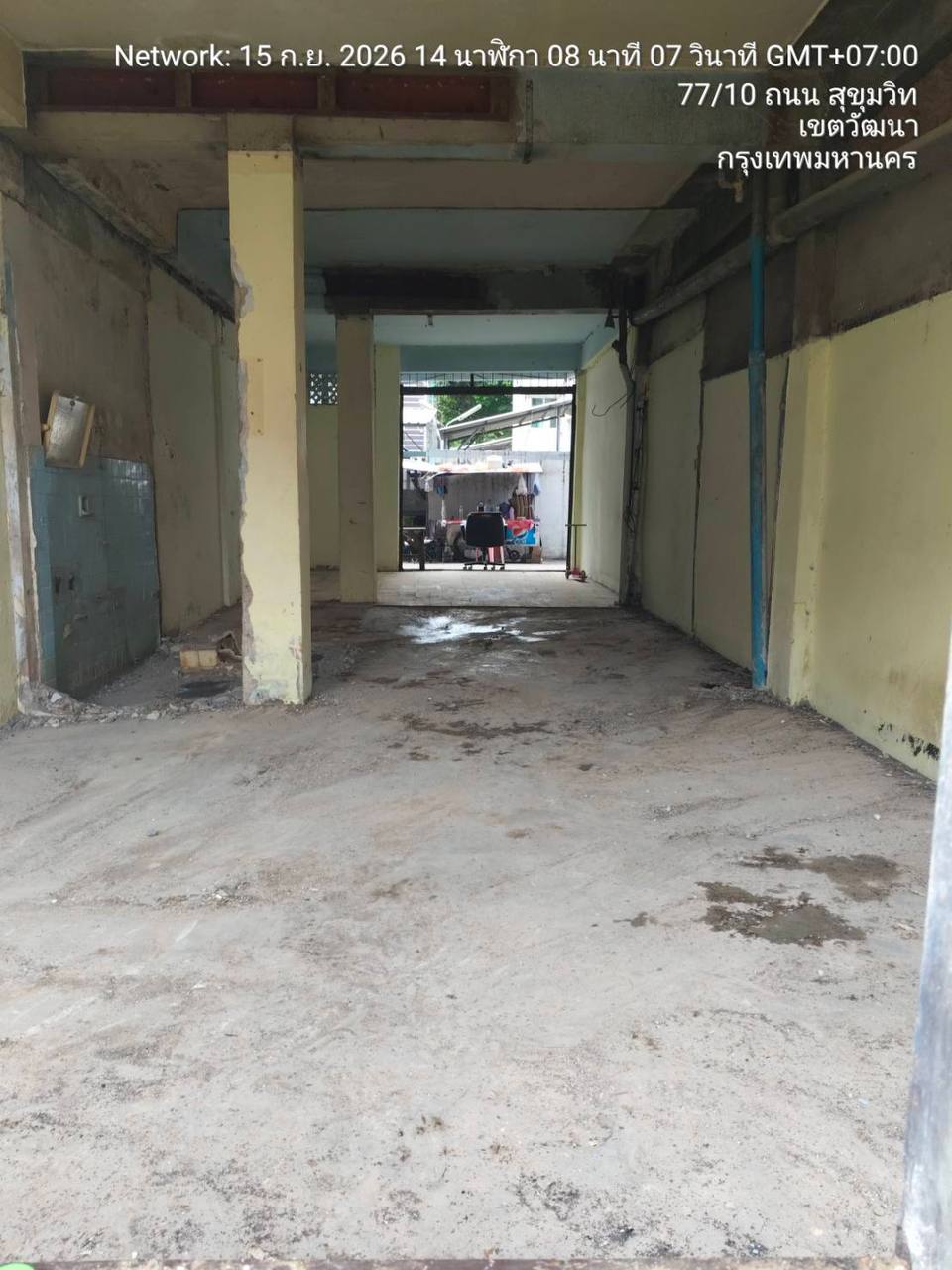
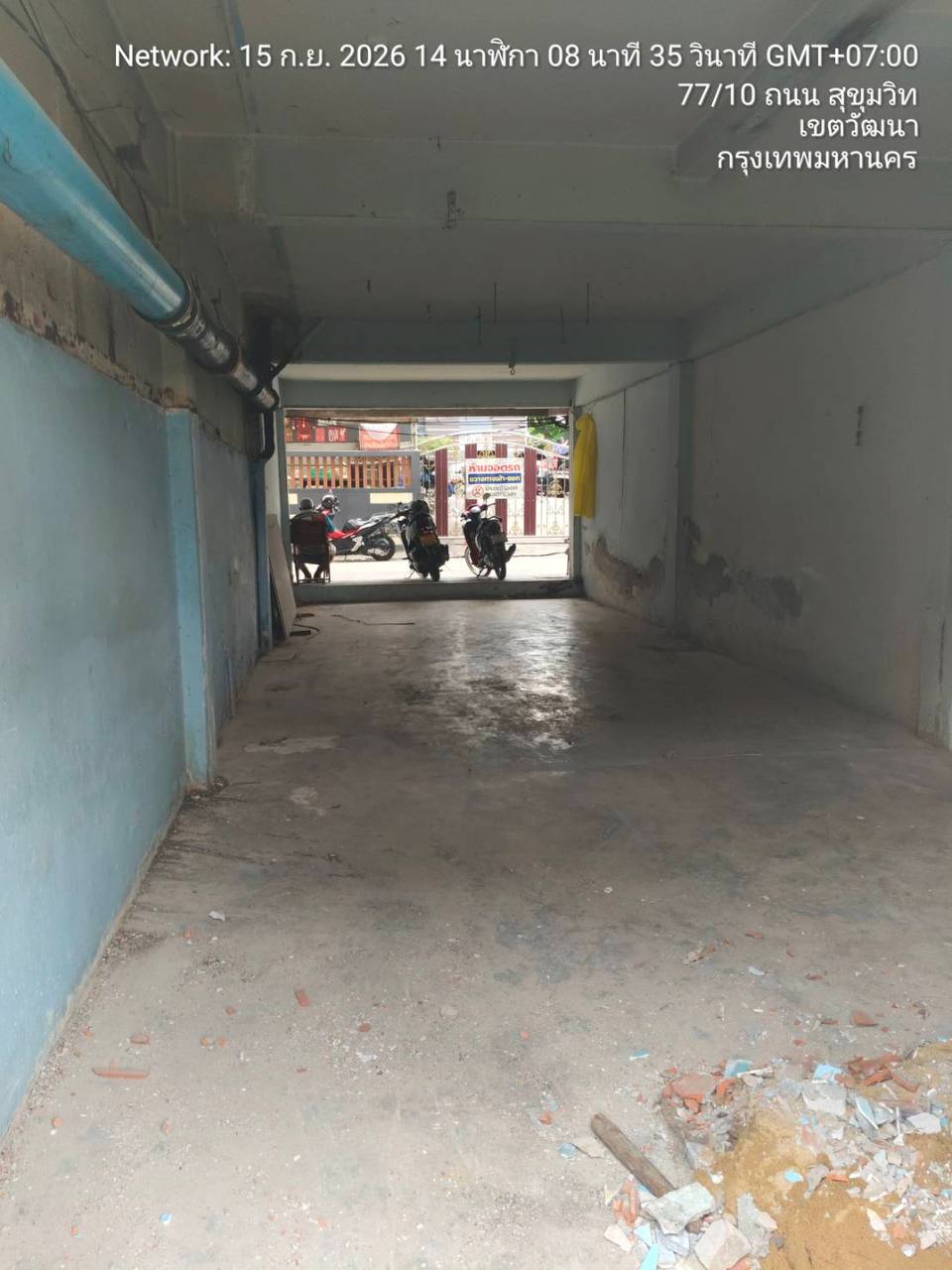
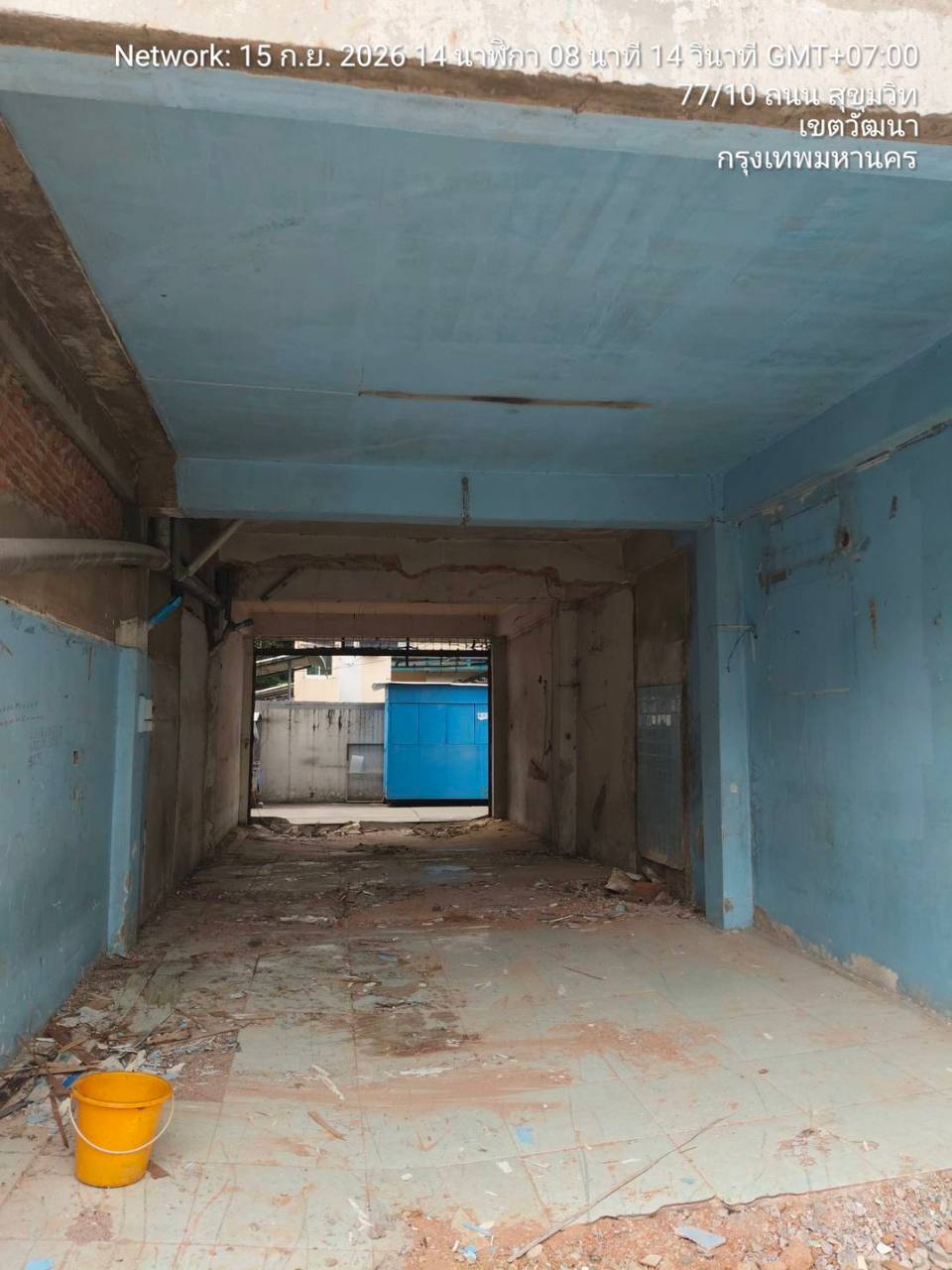
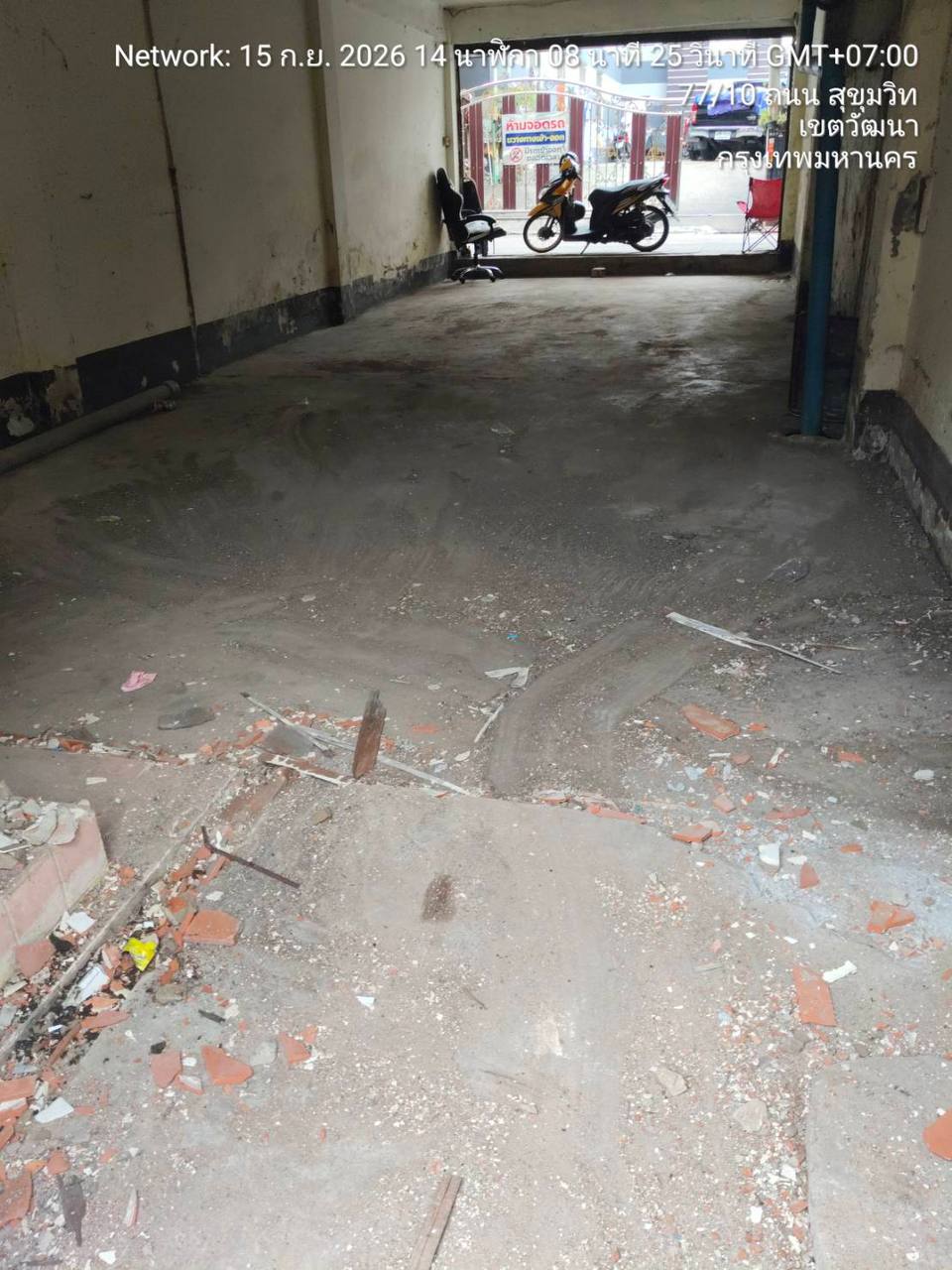
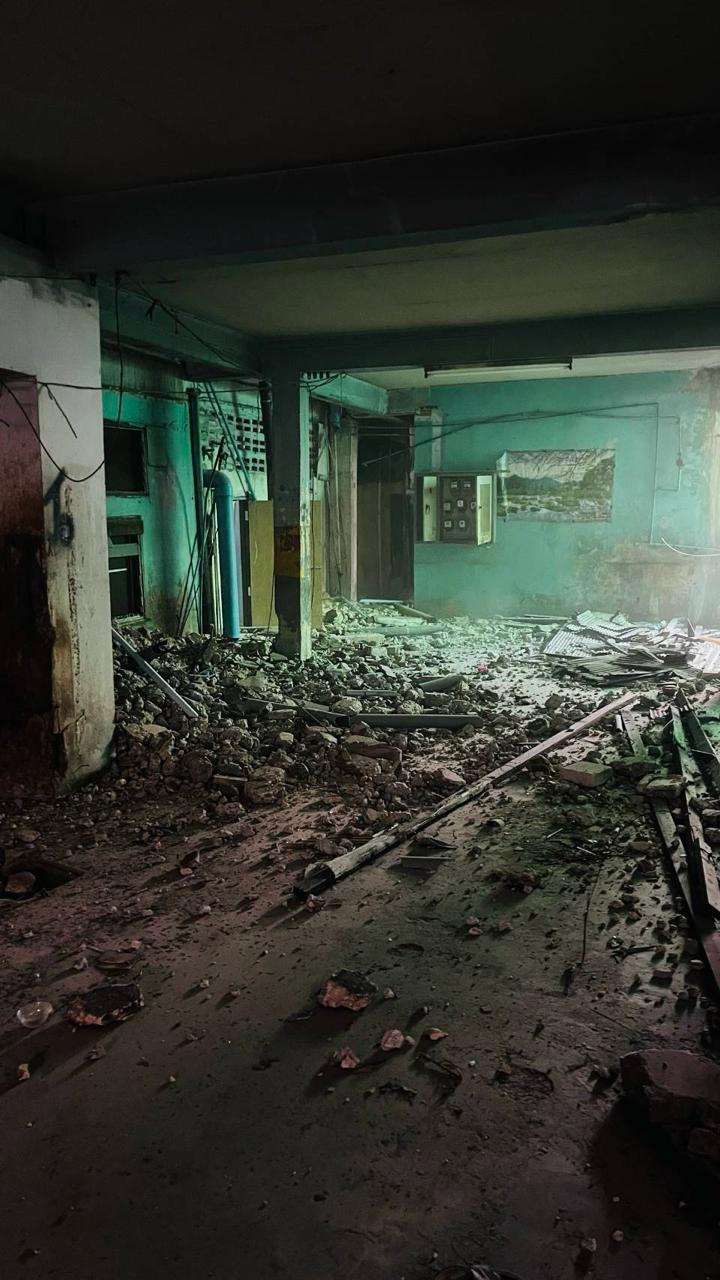
The latest site frames show the ground-floor bays after the internal strip-out, including the removal of the former bathroom enclosures. Room divisions and finishes have been taken away, leaving longer views through the building and making the original concrete structure easier to read.
What this stage confirms
The change is clearest in the depth of the bays. Spaces that previously read as a sequence of small rooms now read as open shells, with columns, beams, perimeter walls, and remaining service lines exposed.
The surfaces are still rough and traces of the old interiors remain. Dust, broken tile, wall scars, and small debris fields make this a strip-out milestone rather than a finished construction moment.
01
Internal partitions and former bathroom enclosures have been removed across the shophouses
02
The full depth of the ground-floor bays is now much easier to understand
03
Columns, beams, wall edges, and service routes are exposed for the next phase
04
Cleaning and preparation remain before new construction begins
Image sequence
Four frames from the cleared ground-floor bays.
Together, these views show the strip-out across several shophouses: opened interiors, removed room divisions, exposed services, and the rough floor condition left after the former bathrooms and finishes came out.
The plan has opened up.Columns and the long interior depth now read without the former room divisions.A clearer street-to-interior view.The bay is largely empty now, with the old wall finish and service line still visible.The building depth is visible again.A through-view showing the shell after internal rooms and finishes were taken out.Removal leaves a rough edge.Broken tile and masonry remain underfoot before cleaning and the next construction phase.
Entry 09
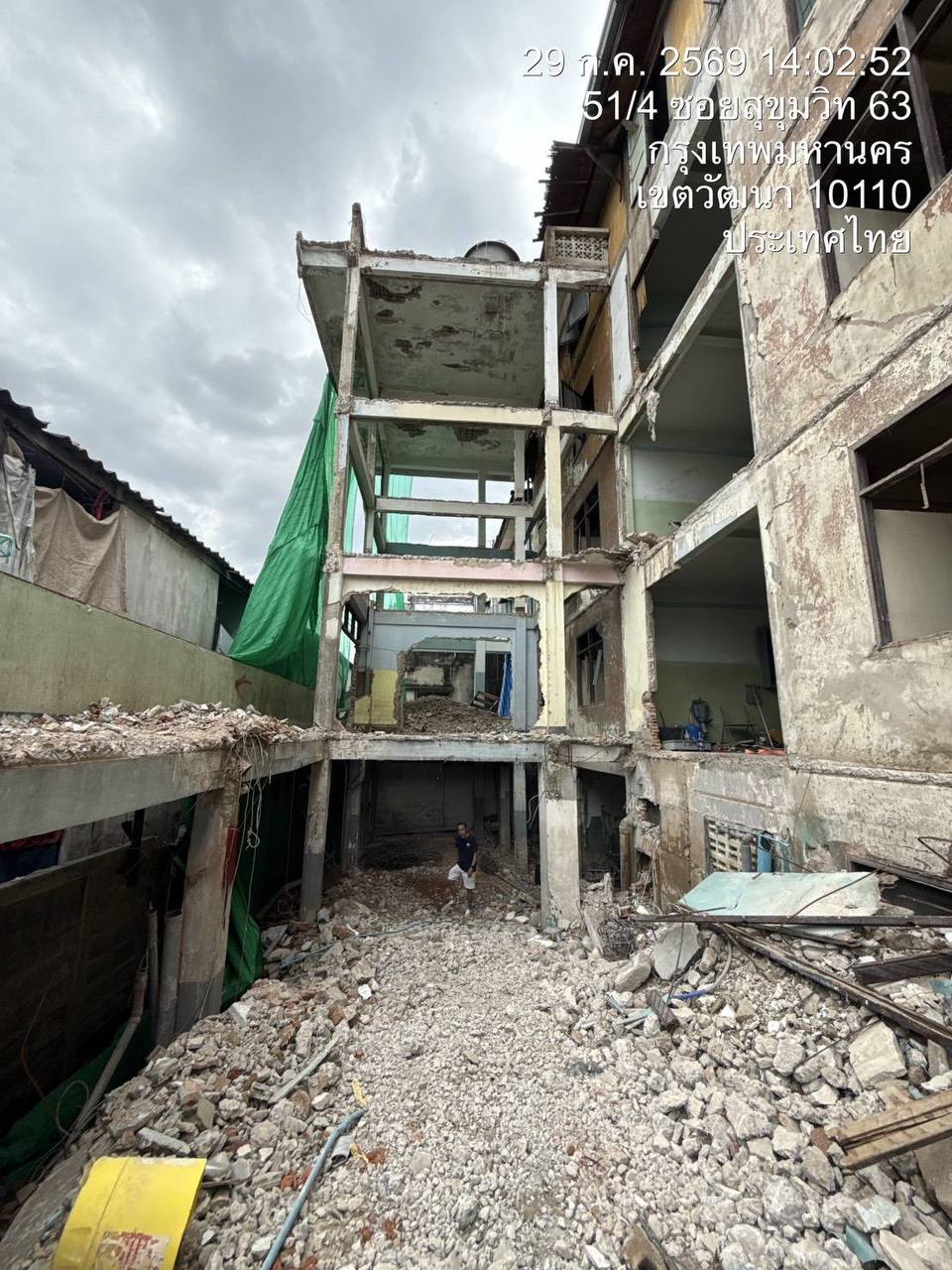
29 July 2026 Main building
Demolition has now reached ground zero, but the site still has a long cleanup phase ahead.
The latest site frame shows a more decisive demolition milestone: the structure has now been broken back to ground level, with the lower zone fully covered in rubble and the building reading as an exposed concrete skeleton rather than a partly enclosed interior. The demolition progress is real, but the scene also makes clear that cleanup and haul-out are still a major part of the work ahead.
What this milestone confirms
This is a stronger threshold than the previous demolition entries. The building is no longer only opening up floor by floor — the demolition has now clearly reached the ground plane, making the full vertical extent of the removal easier to understand in one frame.
At the same time, this is not a clean handover moment yet. The amount of broken concrete, debris, loose material, and rough ground condition still visible across the site shows that a substantial cleanup phase remains before the next stage can begin.
01
Demolition has now reached ground zero and the lower level is fully exposed
02
The structure now reads as an open concrete frame rather than a sequence of enclosed rooms
03
Rubble volume remains heavy, making cleanup the next obvious task on site
04
This marks a real demolition milestone, but not the end of the clearing work
Entry 08
29 June 2026 Main building
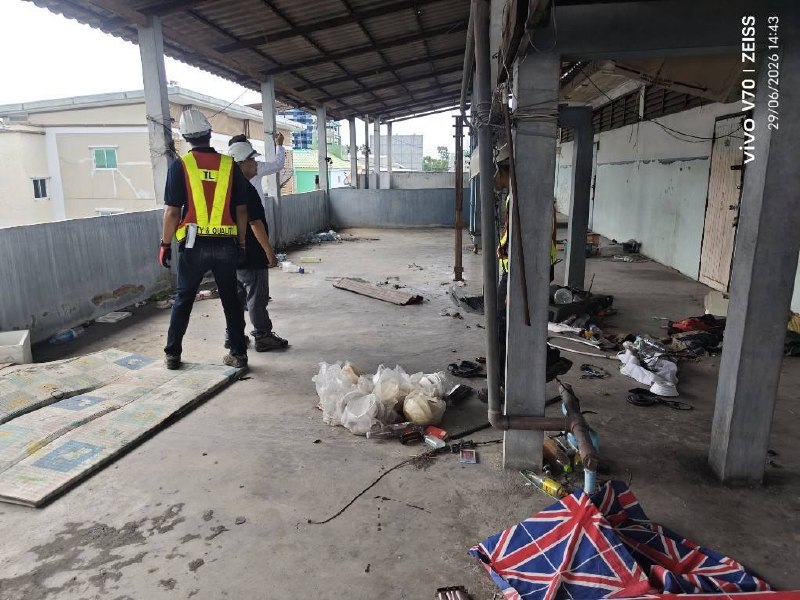
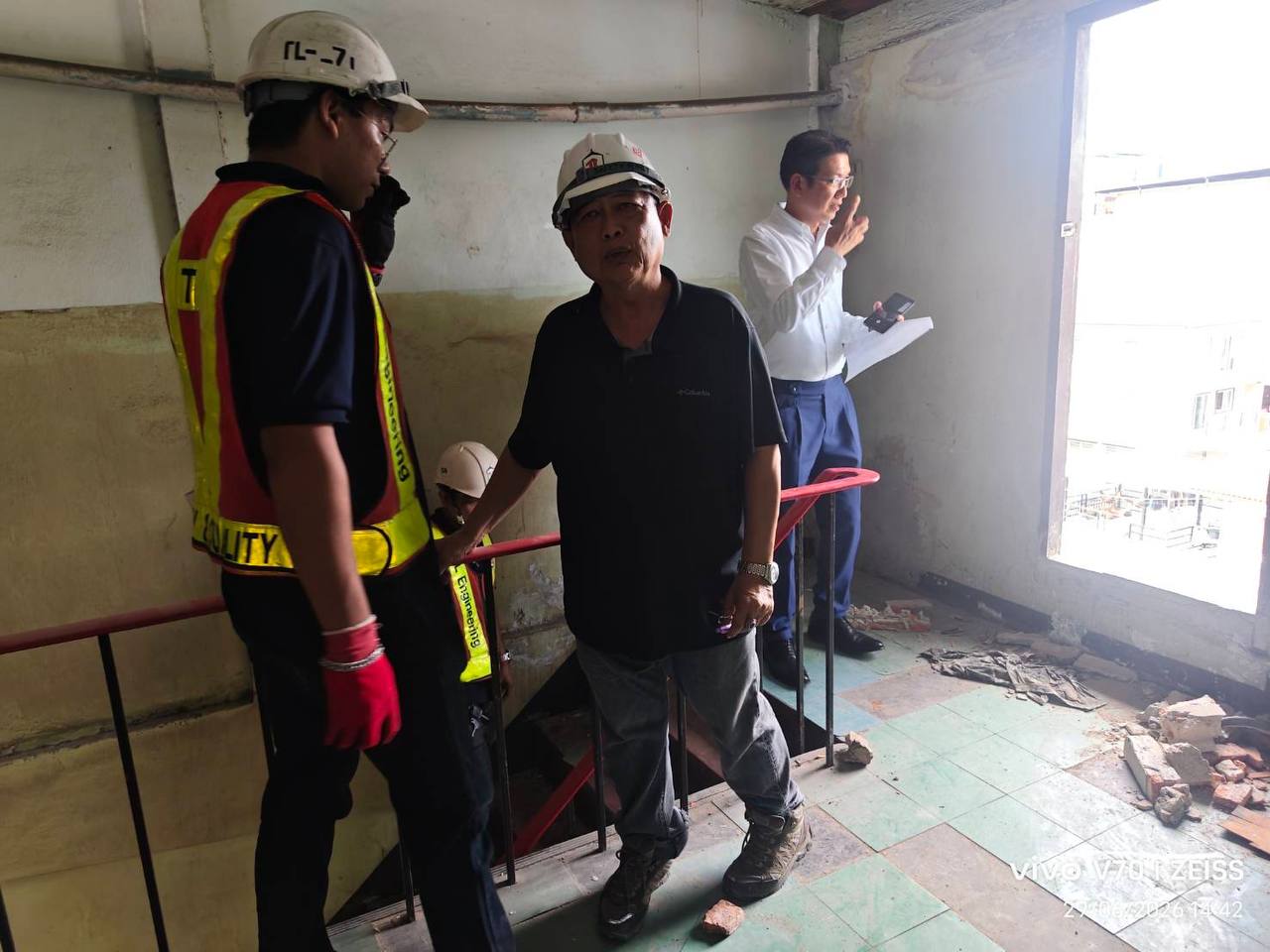
Thai Lift Company completed the first structural site review for the future lift.
Today’s visit marks one of the first true technical steps of the renovation process. While demolition continues at the rear building, Thai Lift Company staff were on site inside the main building to inspect the structure, review conditions floor by floor, and confirm what will need to be in order before lift-related works can move forward.
What this first inspection confirms
This is not a lift-installation update yet. It is a structural review: an early technical visit to understand whether the existing building condition can support the future lift and what requirements must be resolved before that next phase begins.
The images still read as unfinished structure — exposed concrete, steel framing, scattered debris, worn interior surfaces, and open edges — which is exactly why they matter. They show the building at the point where practical assessment starts to shape the renovation sequence.
01
Thai Lift Company staff were on site to assess the building structure for the future lift
02
The visit focused on readiness and technical conditions, not installation work yet
03
The main building remains in an early-stage construction condition while the rear-building demolition continues separately
04
This marks one of the first real coordination steps linking structure, access, and the next renovation phases
Image sequence
Two frames from the first lift-structure review.
One frame shows the team reading the open upper structure directly. The other shows the inspection moving inside, where stair access, floor condition, wall condition, and the raw state of the building are all part of the evaluation.
The structure being read in the open.An upper-level frame where slab condition, column spacing, and exposed working edges are all part of the first structural review.Inside, the access conditions still matter.A more interior frame showing the inspection around the stair opening, with unfinished surfaces and debris still fully visible at this early stage.
Entry 07
16 June 2026 Main building
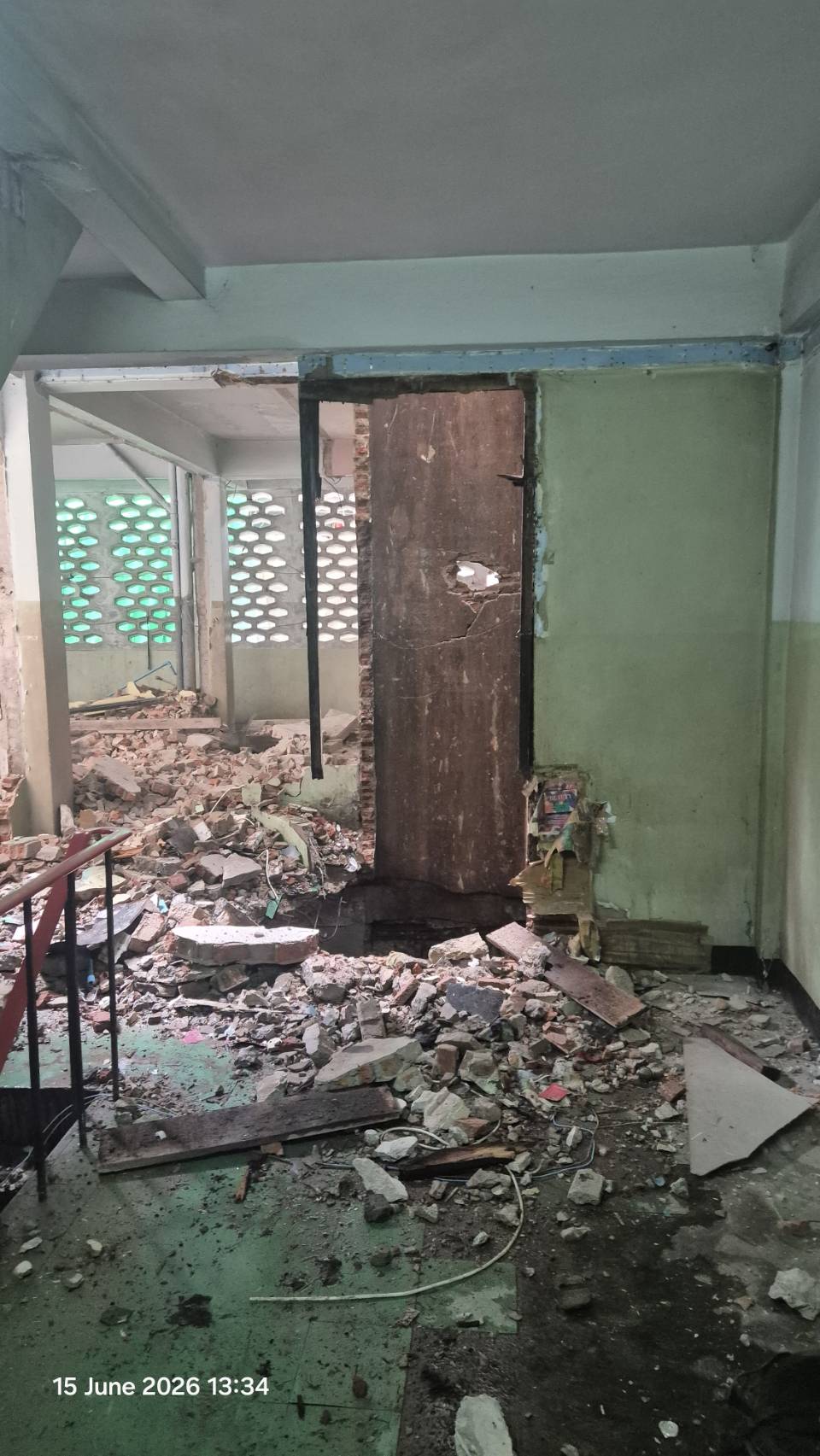
Demolition is now clearly moving through the second floor.
The latest site frames show the second-floor zone in a more advanced demolition condition: room divisions have been broken back further, slab edges are now fully exposed in parts, and rubble is sitting across a broader field instead of reading as isolated break points. The building is still unfinished and harsh, but the progress is easier to read now from both inside the rooms and along the cut edge.
What this stage confirms
This update is important because the work is no longer reading only from the top of the building. The second floor is now visibly being opened up as well, with heavier debris, cut-back walls, and clearer structural exposure through the middle of the main building.
It is still a raw construction stage — broken brick, exposed concrete, old tile, temporary screening, and open voids remain everywhere in view — but the shift is real. After this, the next demolition update will likely be when the demolition phase is completed rather than through smaller intermediate steps.
01
Demolition is now clearly visible across the second-floor rooms, not only above them
02
Wall removals and slab-edge exposure are making the building easier to read structurally
03
Rubble volumes now show a more serious removal phase across this level
04
This marks a stronger demolition milestone before the next update at completion of the demolition works
Image sequence
Four supporting frames from the second-floor demolition phase.
These views show the change directly: a broad overview through the opened rooms, a darker interior edge where the removal has pushed deeper into the plan, a rubble-heavy corridor condition, and a roof-opened room where the structure is now reading from above and within at the same time.
The second-floor opening now reads immediately.A wider frame showing that this level is no longer intact room by room, but opening up across a larger continuous section.Interior breakage now pushing deeper inside.A more enclosed view where the broken doorway line and debris field make the second-floor removal feel much more advanced.The rubble field is now doing part of the storytelling.This longer corridor view makes the amount of material already taken down on the second floor easier to understand in one frame.Above and within, the structure is now exposed at once.An open-roof room that shows the demolition no longer as surface damage, but as a more material structural clearing phase.
Entry 06
30 May 2026 Main building
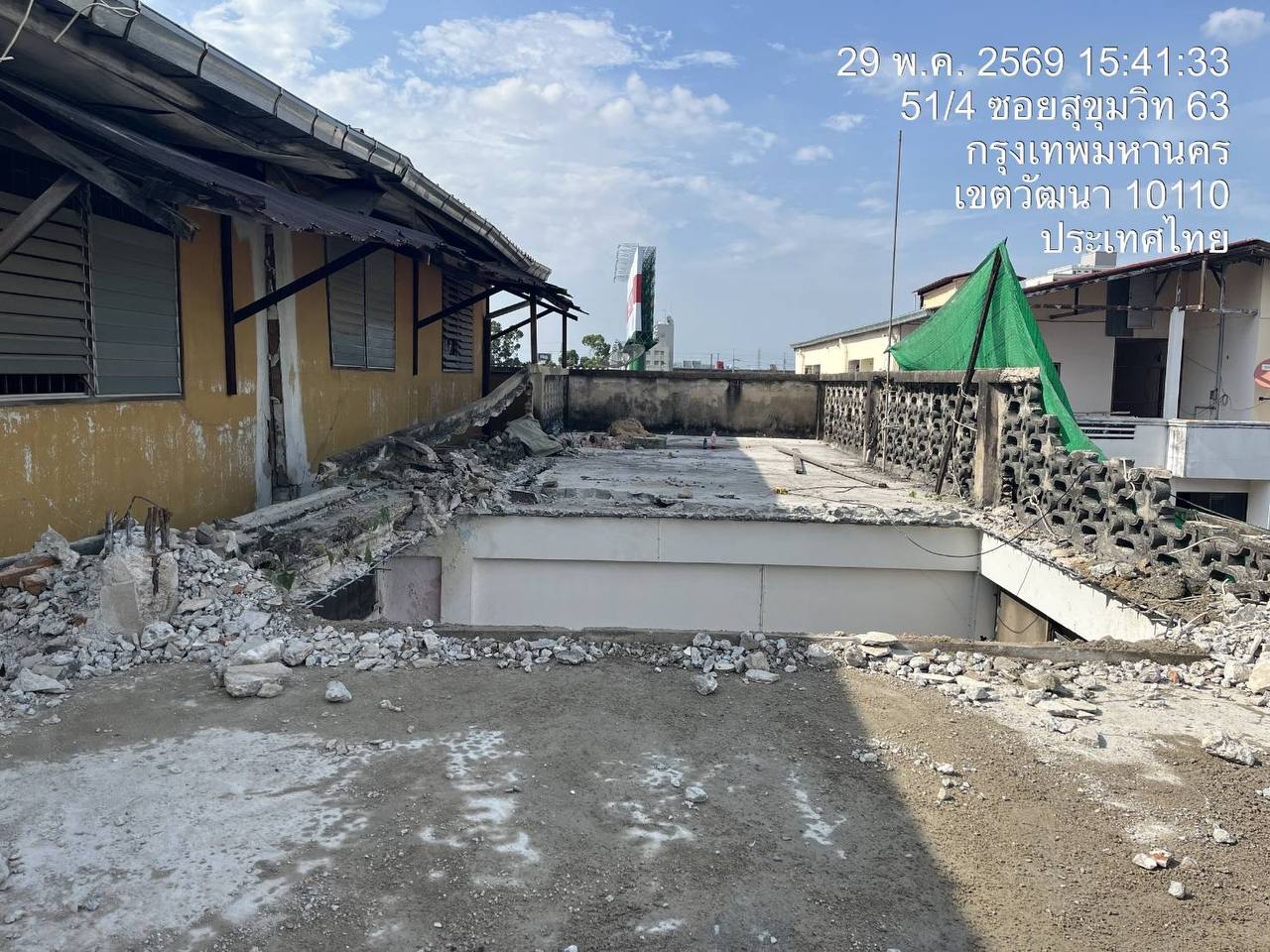
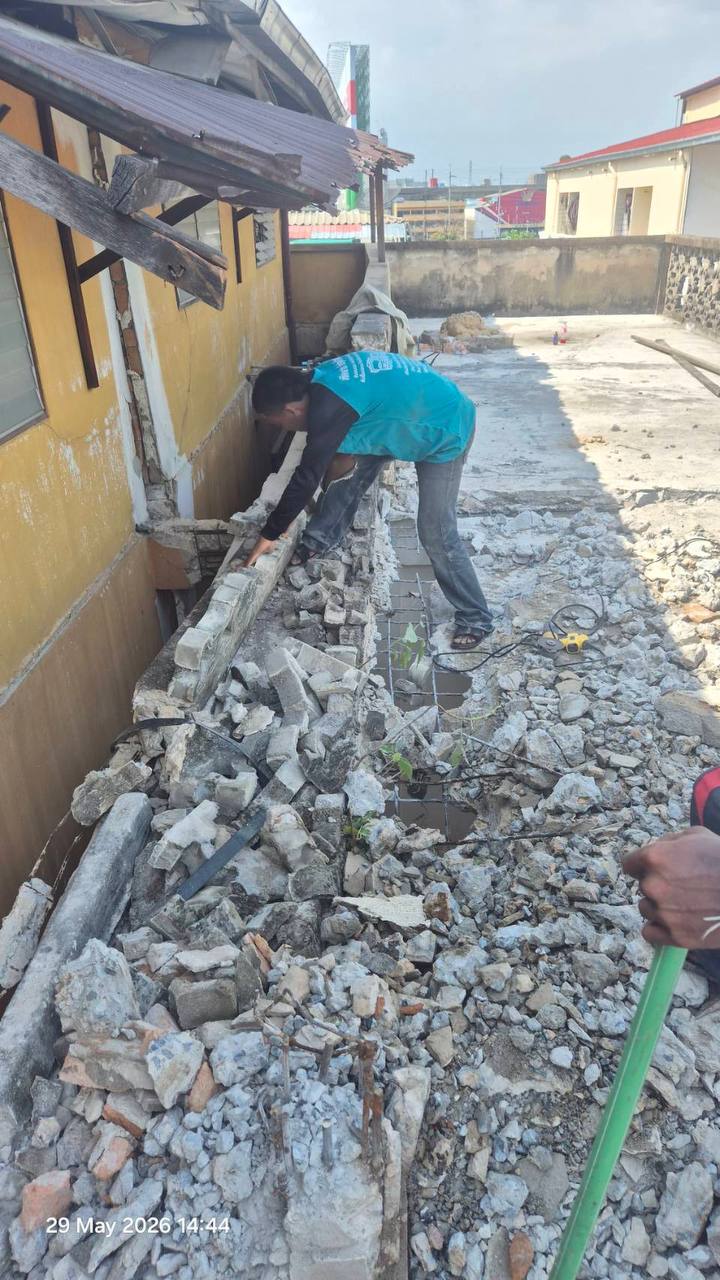
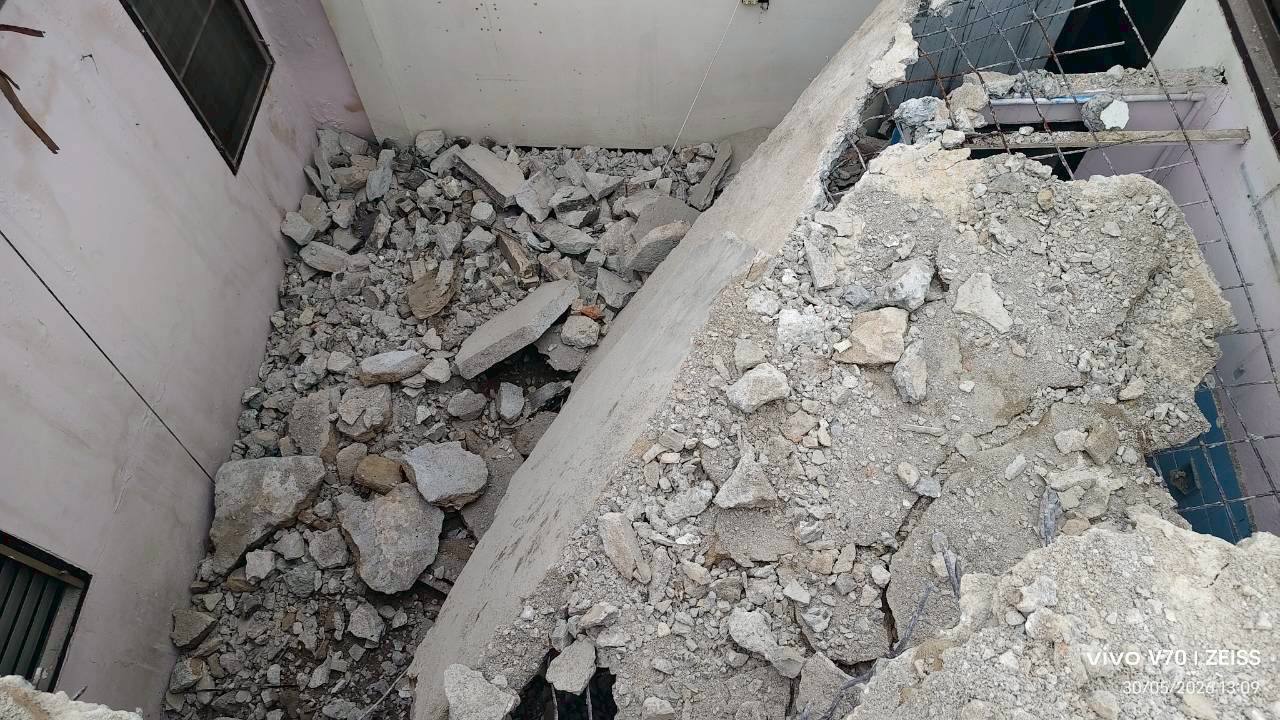
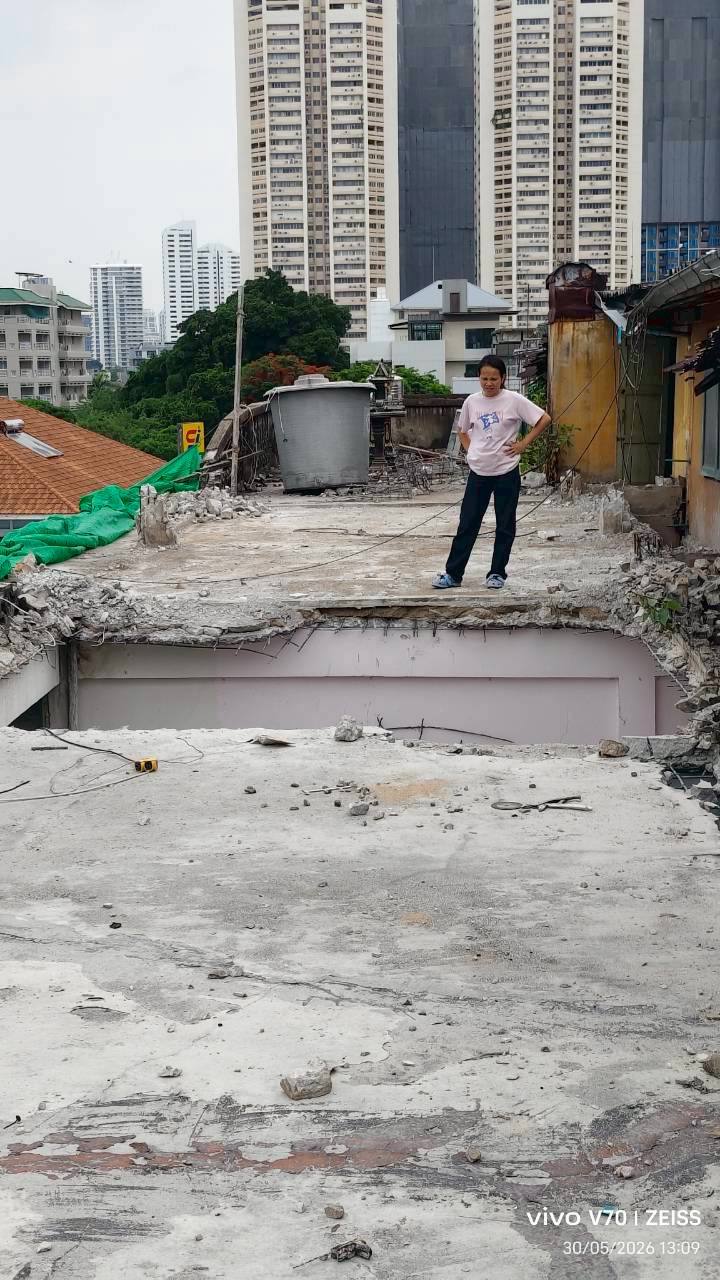
The fifth-floor demolition phase now reads as materially cleared.
The latest site images show the top-floor demolition no longer as a beginning, but as a more advanced clearing condition. What was first visible on 20 May as active breakage and first-day rubble now reads as a more opened slab, heavier removal, and a clearer structural stripping phase across the upper level.
What the latest update confirms
This is not a polished reveal moment. It is a stronger construction milestone: the fifth-floor demolition phase has moved visibly forward, with more of the upper level opened up and the site reading less like first impact and more like sustained clearing.
The newest images are important because they shift the journal from announcing demolition to documenting real progress inside it. The atmosphere is still raw — exposed edges, dust, debris, and unfinished surfaces — but the difference is that the top floor now appears substantially further through the demolition cycle than it did in the previous update.
01
The top-floor demolition zone now reads as materially more open than in the 20 May entry
02
Rubble removal and slab clearing appear meaningfully further advanced
03
The journal now moves from demolition starting to demolition visibly progressing
04
This remains a journal update, not yet a homepage-level reveal moment
Image sequence
Four supporting frames from the fifth-floor clearing phase.
These views make the shift more direct: a wider opening now visible in the slab, edge rubble still being worked through, the new void seen from above, and a human figure helping the scale of the upper-floor clearing read immediately.
The opening now reads immediately.A cleaner wide frame showing the slab no longer as first impact, but as a more established clearing condition.Edge rubble still being worked through.A tighter proof frame where active clearing remains visible along the side of the upper slab.The new void seen more directly.Not a mood image — a blunt construction view that shows how much of the floor has now been opened.Scale is now easier to read.The person at the far end helps the clearing register not as isolated breakage, but as a much larger upper-floor condition.
Entry 05
20 May 2026 Main building
Demolition has now started, beginning at the top floor.
The first true demolition phase is now underway. After weeks of preparation, clearing, and early strip-out, the building entered its next stage today with trucks on site, safety notices fully up, and material starting to come out from within.
What changed today
This is the point where preparation gives way to irreversible work. Demolition has now started on the main building, beginning at the top floor, with workers now visibly active on the slab above while haul-out access continues below.
The images still read as rubble, dust, stained walls, low passages, and improvised working conditions rather than anything resolved. That is exactly why they matter. They show the building in the act of being opened, not merely announced.
01
Demolition on the main building began today, starting at the top floor
02
Trucks and removal access are now active at the street-facing bays
03
Safety notices and controlled entry are now fully visible from the frontage
04
Interior rooms and upper-level passages are beginning to be stripped back in earnest
Image sequence
Four supporting frames from the first demolition day.
These views make the shift more direct: workers now on the upper slab, broken rooms opening up inside, street-level safety conditions in place, and the first active clearing visible across the top floor.
Top floor now actively worked.A direct proof image from above: one worker standing inside the breakage as the first slab-level clearing begins.The crew now visible on site.A wider frame that shows the work no longer as setup, but as an active demolition scene across the upper level.Another angle on the upper crew.A second rooftop view showing the team spread across the slab as the top-floor demolition moved further into active clearing.Inside now carrying the damage.A darker interior frame showing the heavier debris field now forming inside the building.
Entry 04
19 May 2026 Rear building
Beginning the rear-building strip-out before demolition.
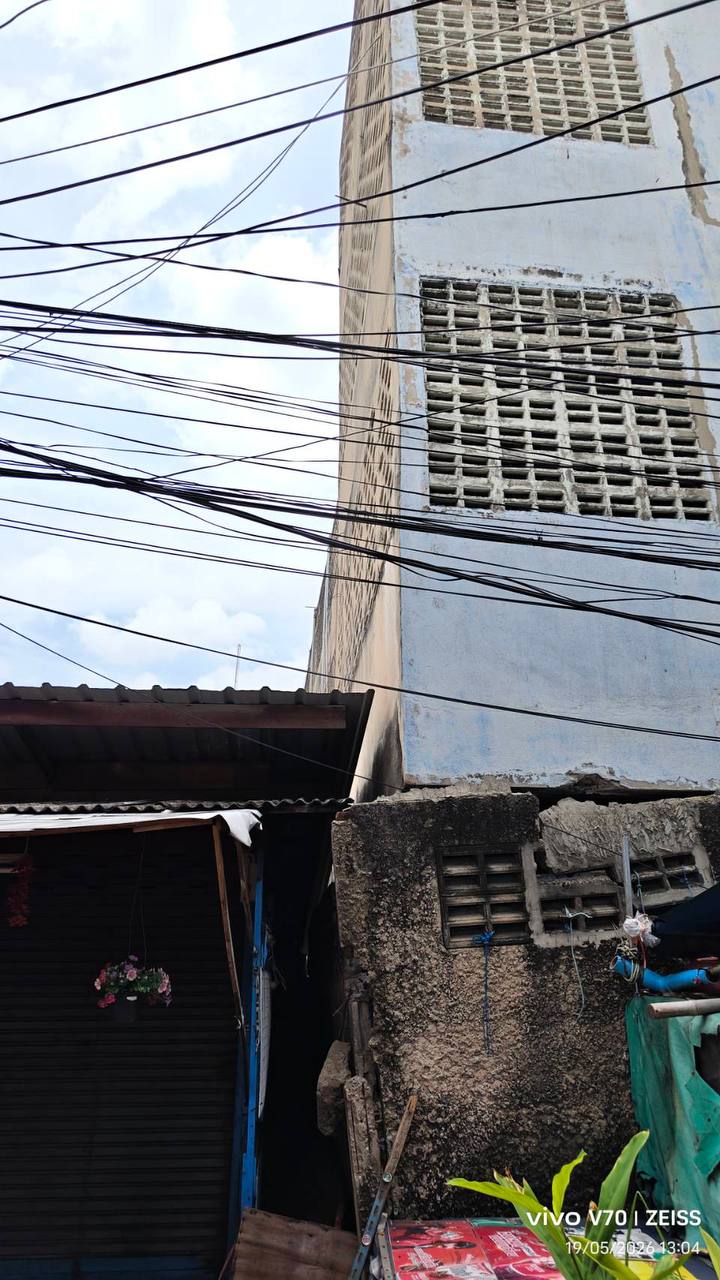
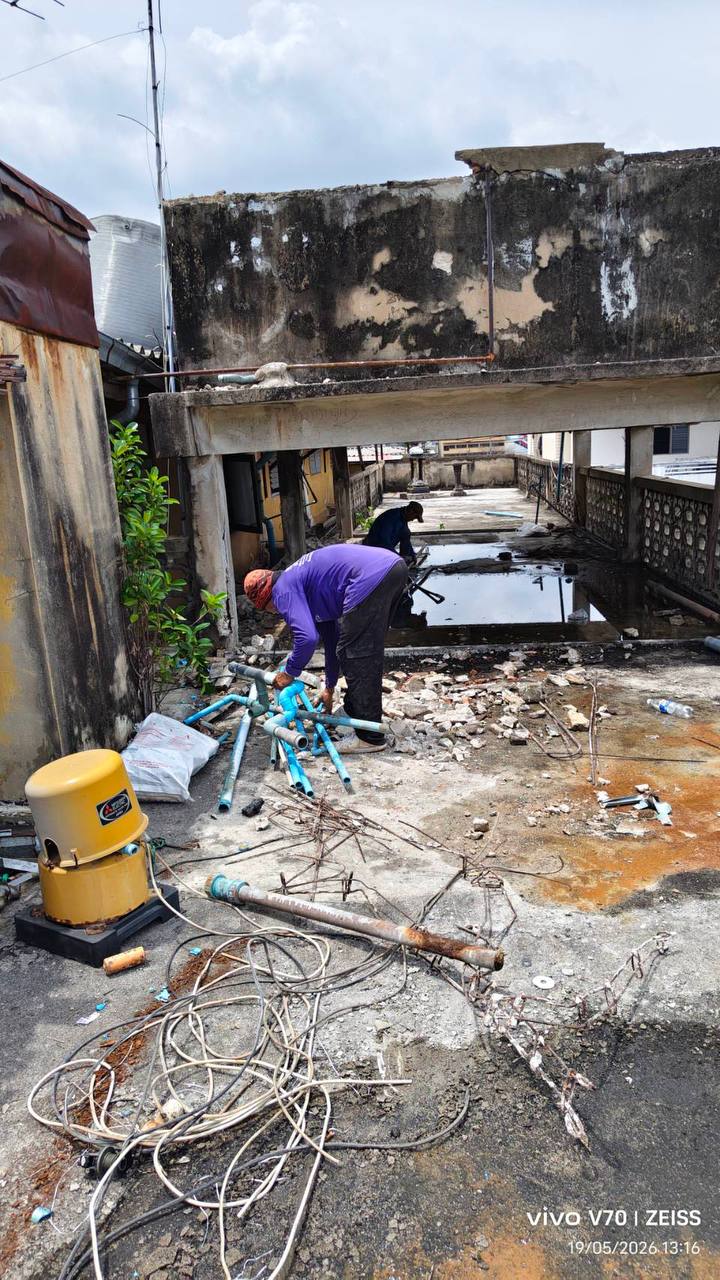
Work has now started behind the front building. Internal stripping and service removal are underway in the rear structure, which will be fully cleared to make way for parking while the front building remains the one being renovated.
What this marks
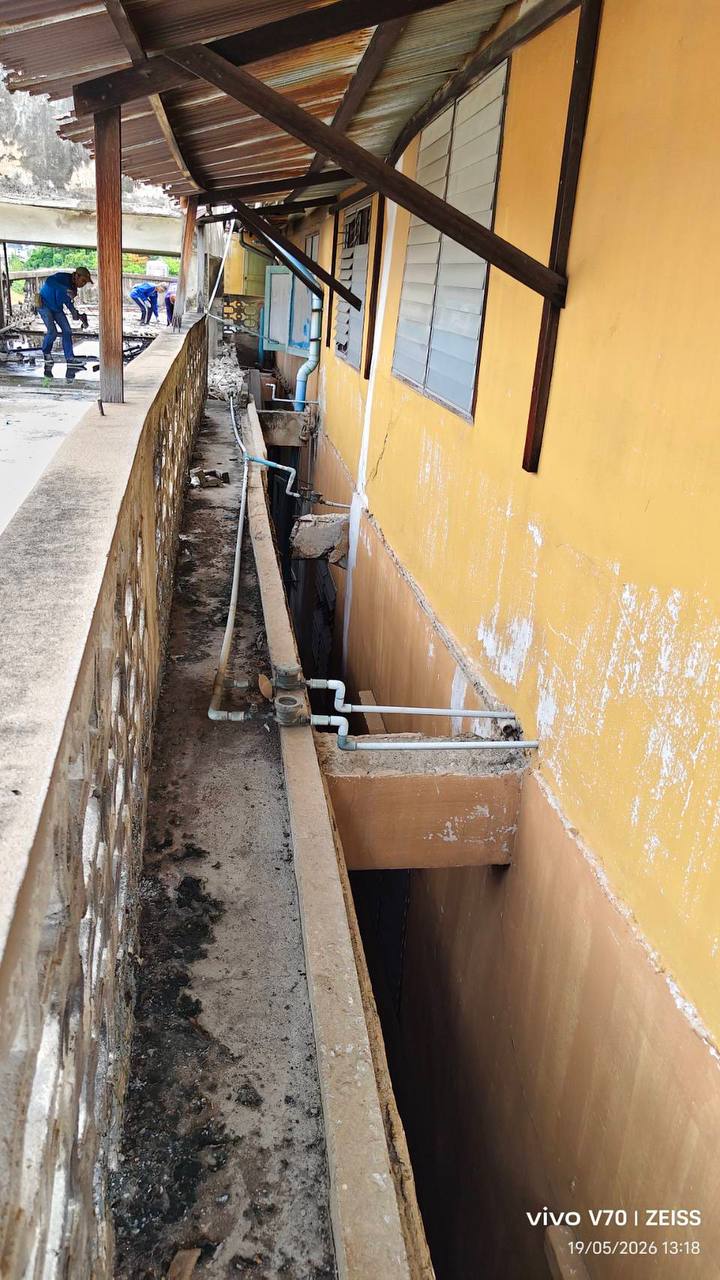
This is an enabling phase rather than a finished renovation moment. Barricades were not yet in place, but the first internal removals had started, with pipes and services being taken out from within before the structure is cleared.
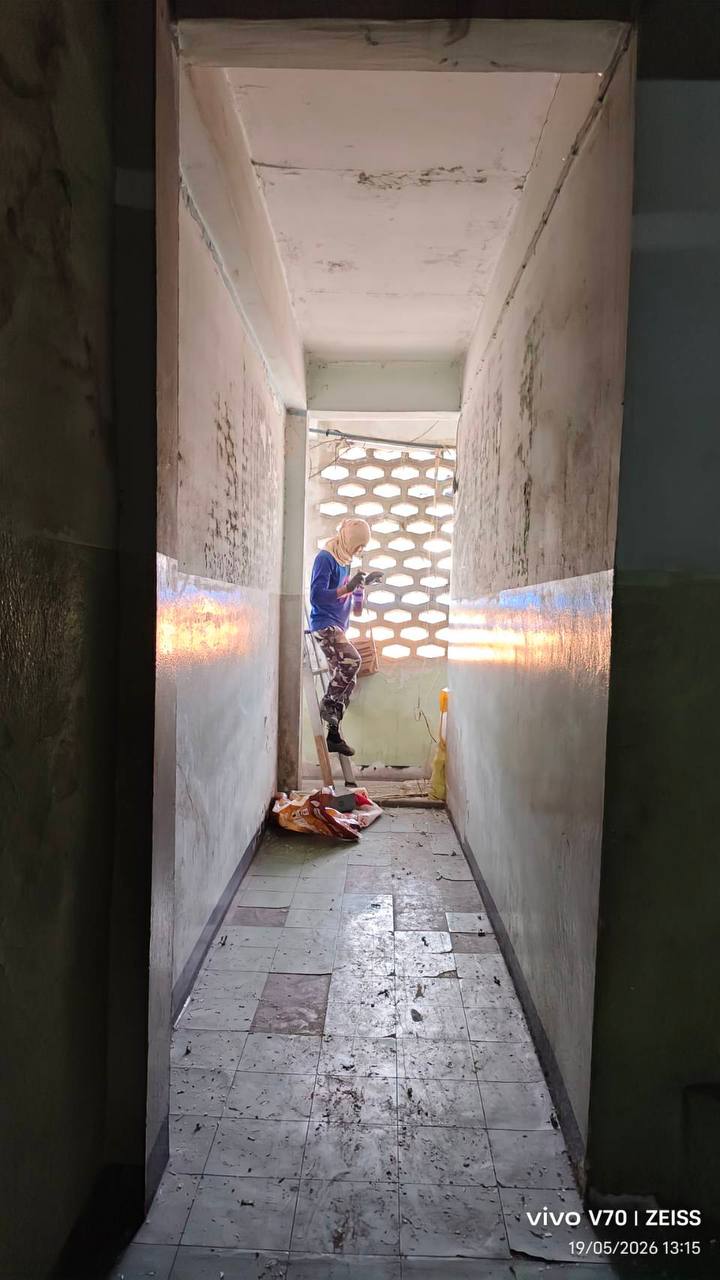
The image still reads as shell, wear, and utility: faded walls, ventilation blocks, exposed edges, overhead wires, and a tight service gap. That matters because this part of the site is not being restored. It is being emptied in order to open the rear portion of WITHIN for parking.
01
The rear building has entered internal strip-out ahead of full demolition
02
Pipes and services are being removed before the site is opened further
03
The front building remains the part being renovated and retained
04
This clearance phase is what begins to make space for future parking
Image sequence
A few frames from the rear clearance work.
These supporting views show the site more directly: services coming out, debris underfoot, interior passages being worked through, and the exposed side-corridor conditions around the rear structure before it is cleared.
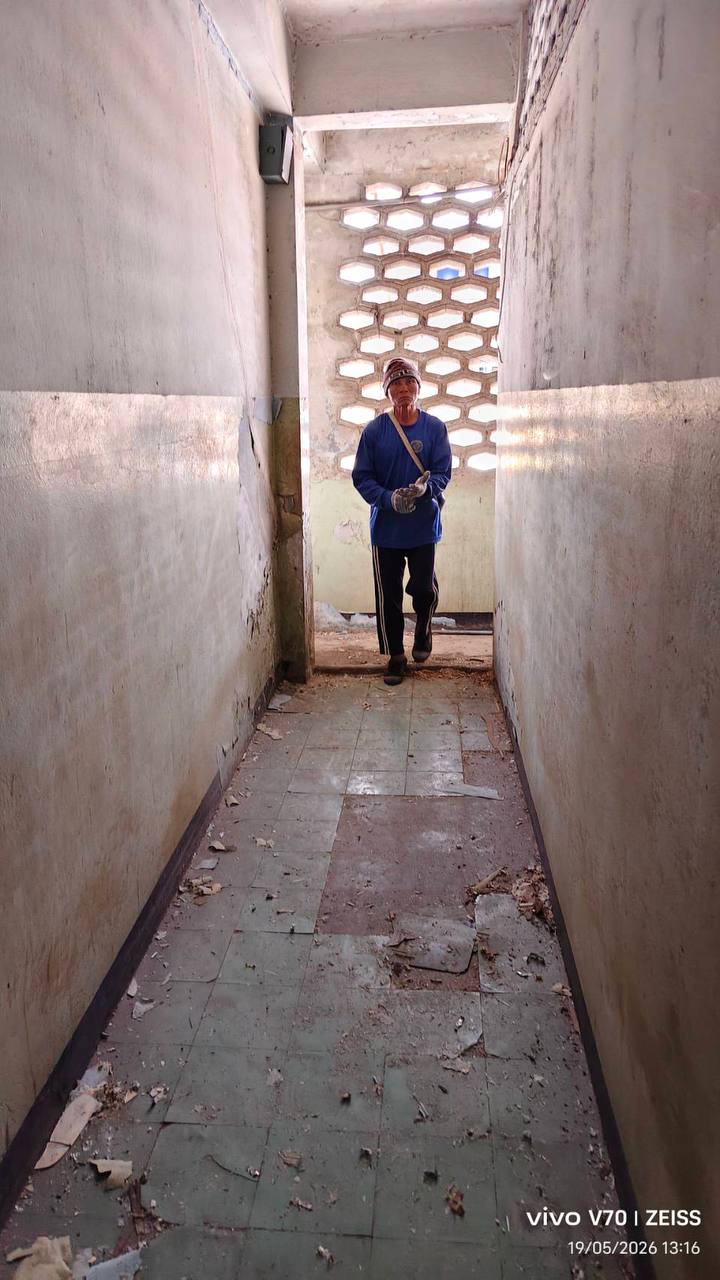
Services coming out.Pipes, cables, and loose debris being worked through in the rear service area before the larger clearance phase.Inside still being opened up.A worn internal passage where early access, clearing, and removal work are now underway.Debris before demolition.Not yet a demolition image, but clearly a building being emptied in preparation for what comes next.Edge conditions exposed.The side corridor makes the service routing, trench line, and tight working conditions visible before the rear building is taken out.
Entry 03
12 May 2026 Front facade
Preparing the frontage for the first construction signs.
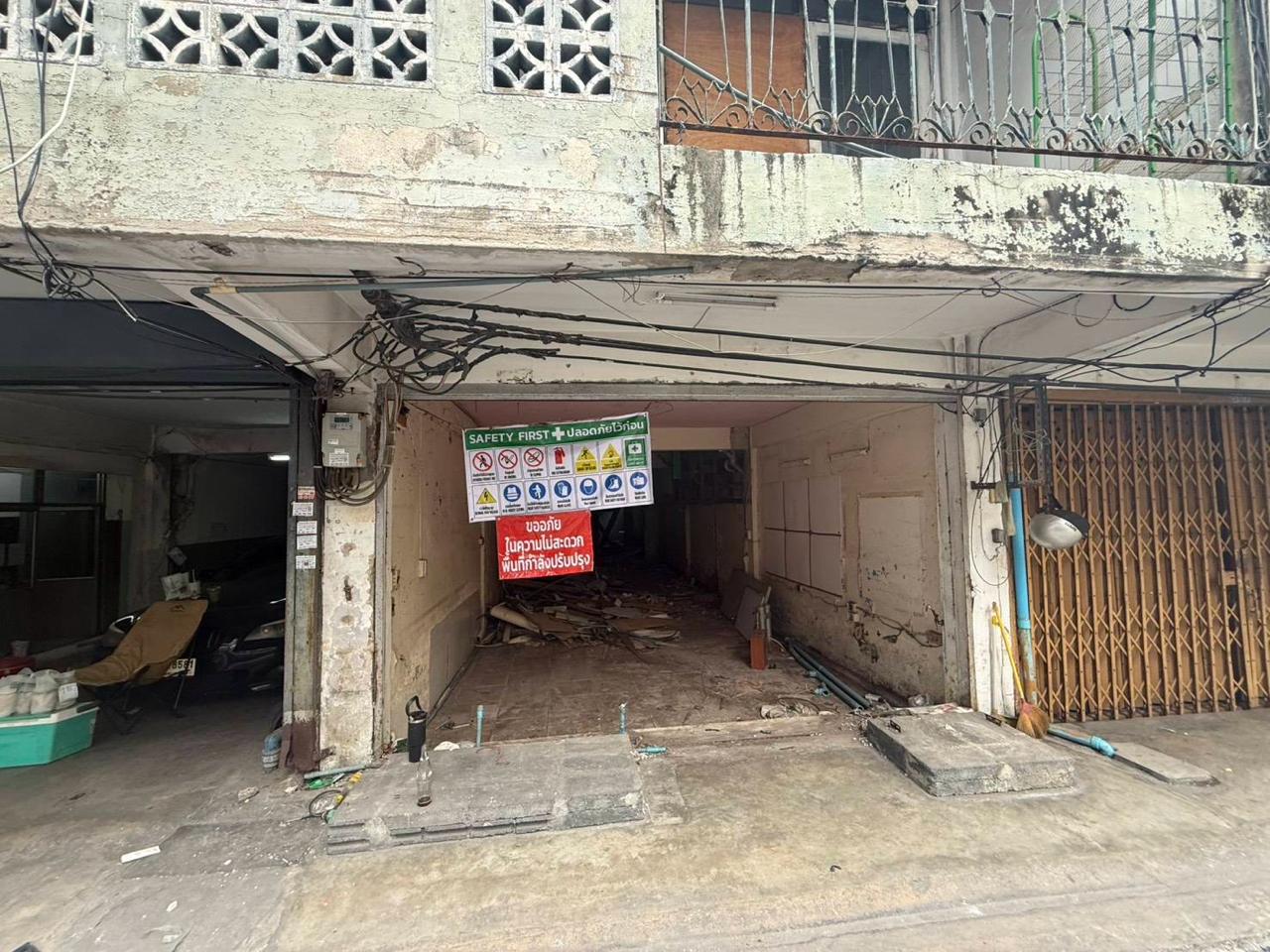
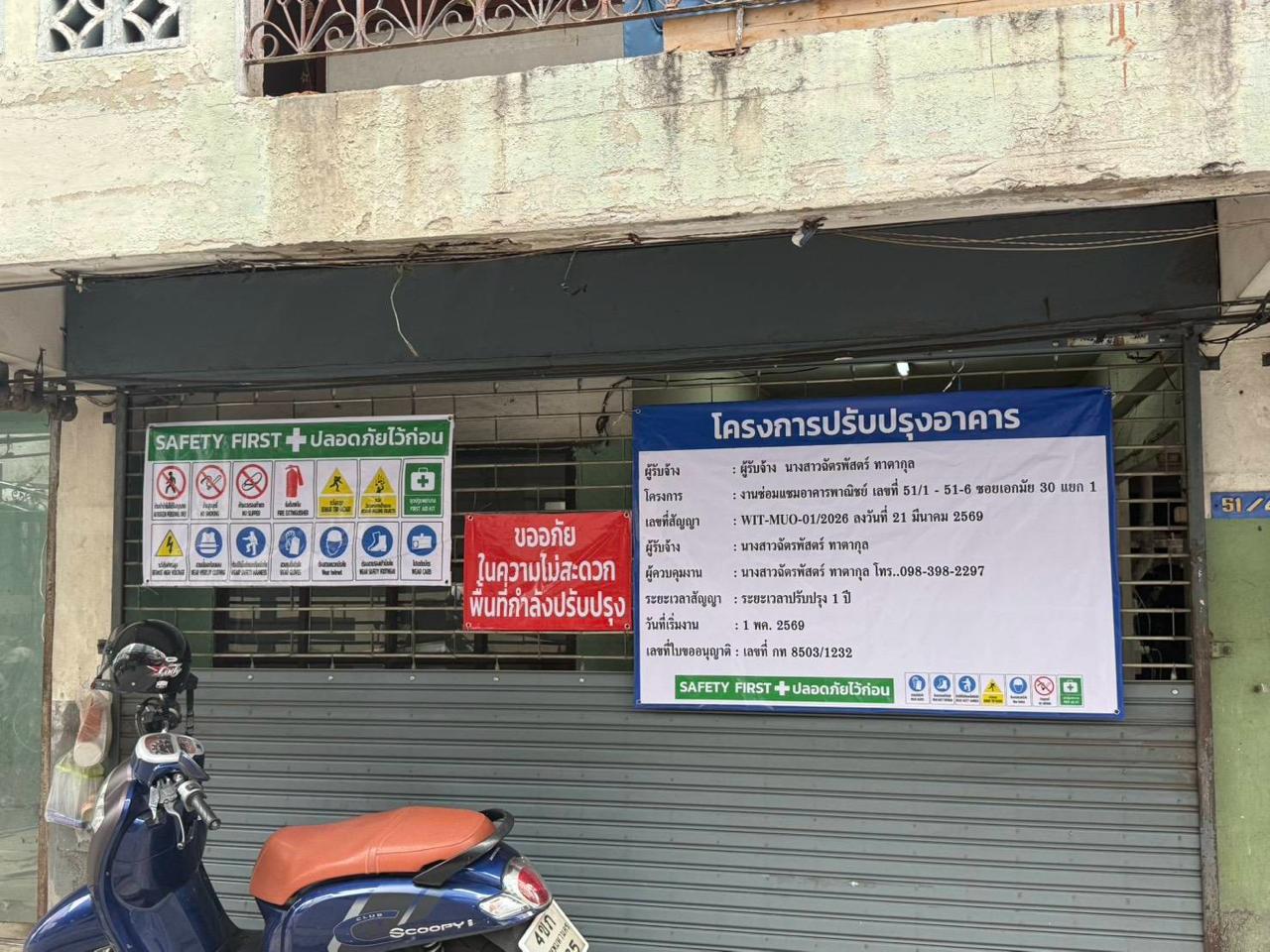
The first public construction markers were being prepared and installed at street level. What looks small later often begins with the least glamorous work: sorting cables, resetting damaged gate conditions, mounting signage, and making the building legible from the street again.
What changed that day
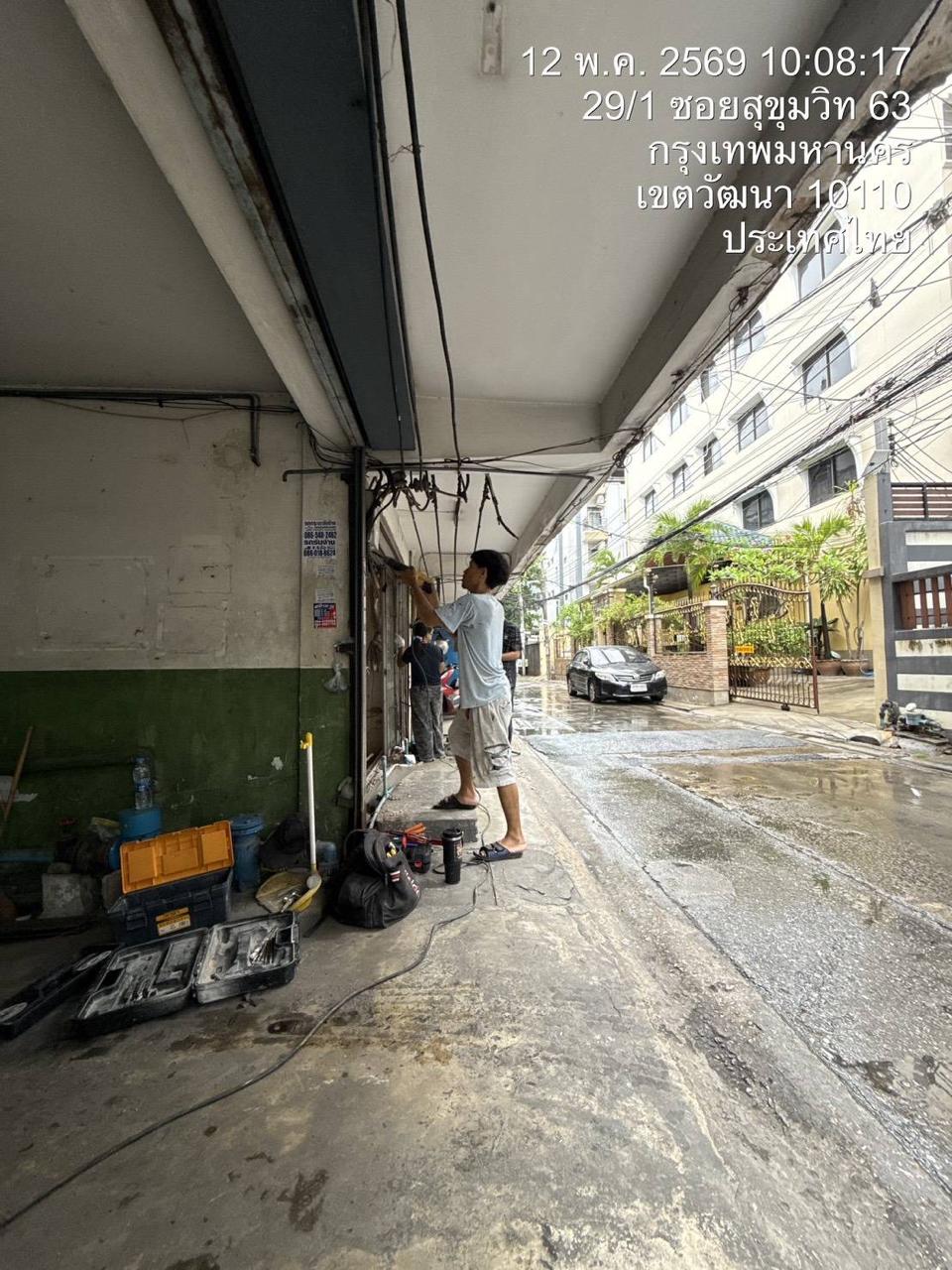
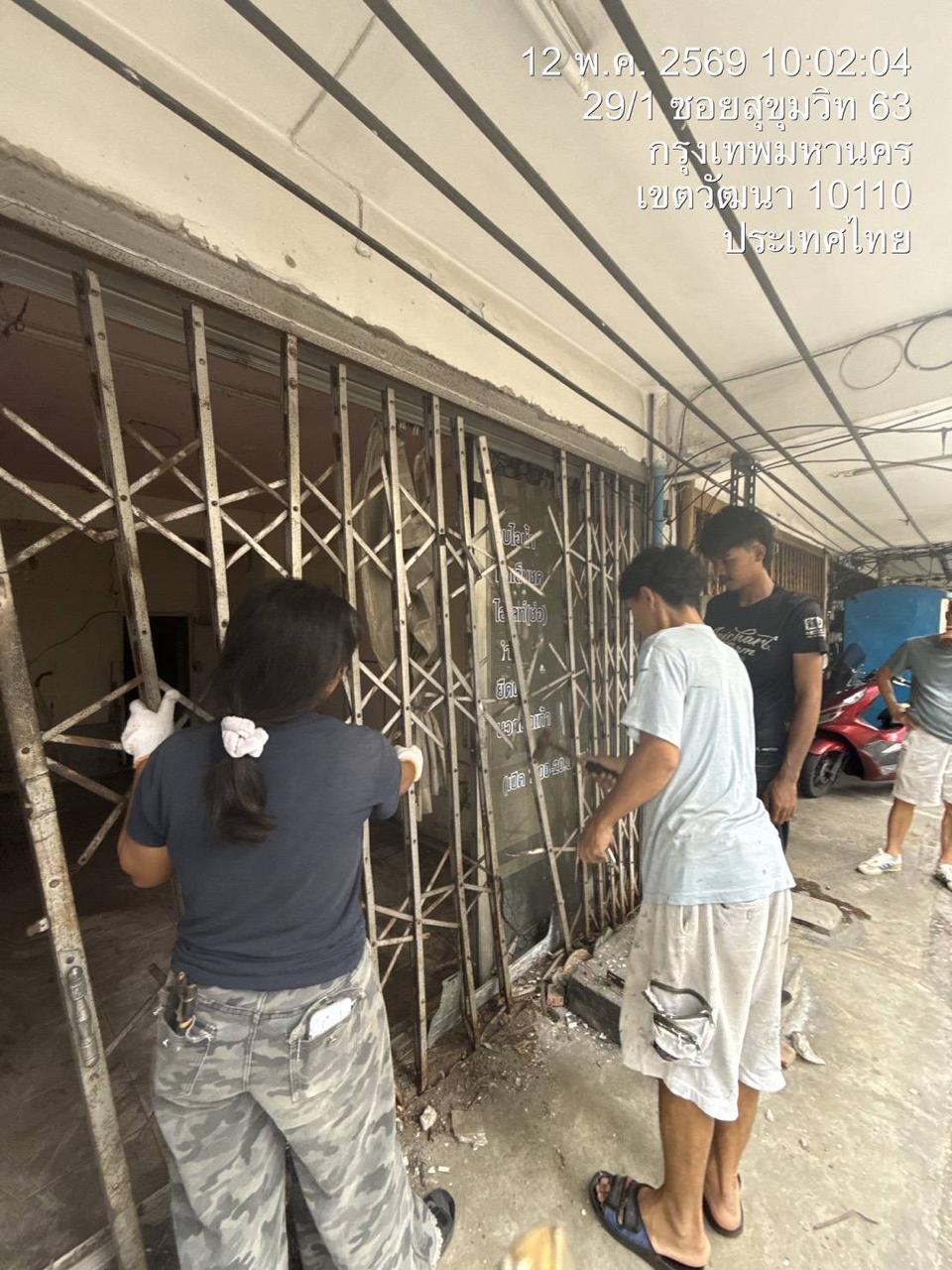
This morning the team was under the awning, working through wiring and mounting points before the under-construction signage went up on the street-facing facade.
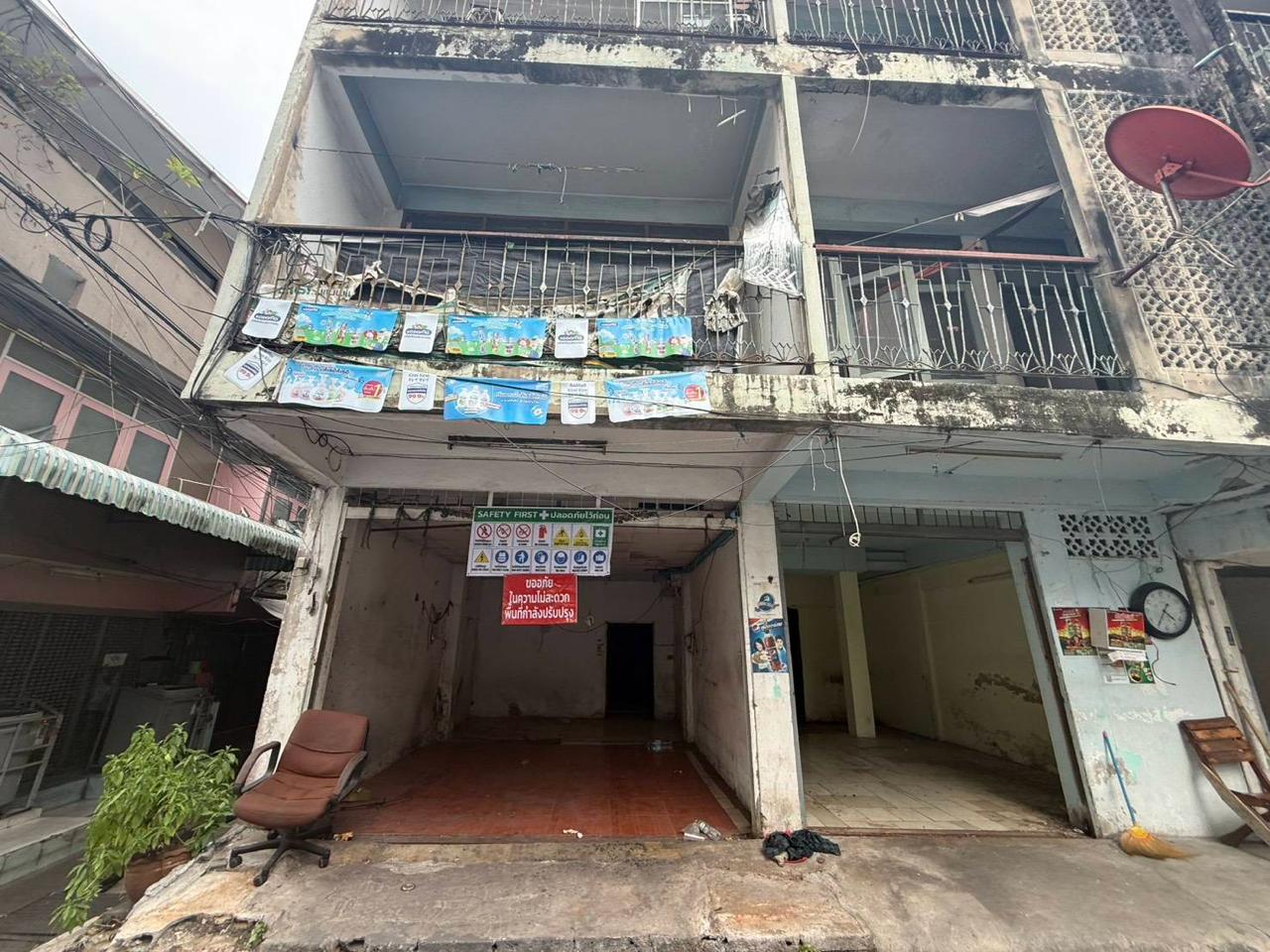
Wet pavement, exposed cables, open tool cases, broken thresholds, and the old surface still fully visible — not the finished picture, but part of the honest one. A useful threshold moment before the exterior identity begins to settle.
01
Electrical prep and mounting points worked through on site
02
The old frontage still visible while the facade was being reset
03
Construction notices began to appear at street level
04
A quiet but important kind of progress: technical, practical, easy to miss later
Image sequence
A short set from the facade work.
Four supporting frames from the same morning, kept together under one entry rather than scattered across the page.
Threshold work.The old gate and entry condition being worked through before the frontage was reset.Inside still raw.The building remained visibly unfinished, with debris, exposed services, and temporary safety measures in place.The larger condition.The full facade as it stood then — worn, marked, and still between identities.The first public signal.Safety notices and renovation information now visible from the street.
Entry 02
4 April 2026 Rooftop
Clearing the site before demolition began.
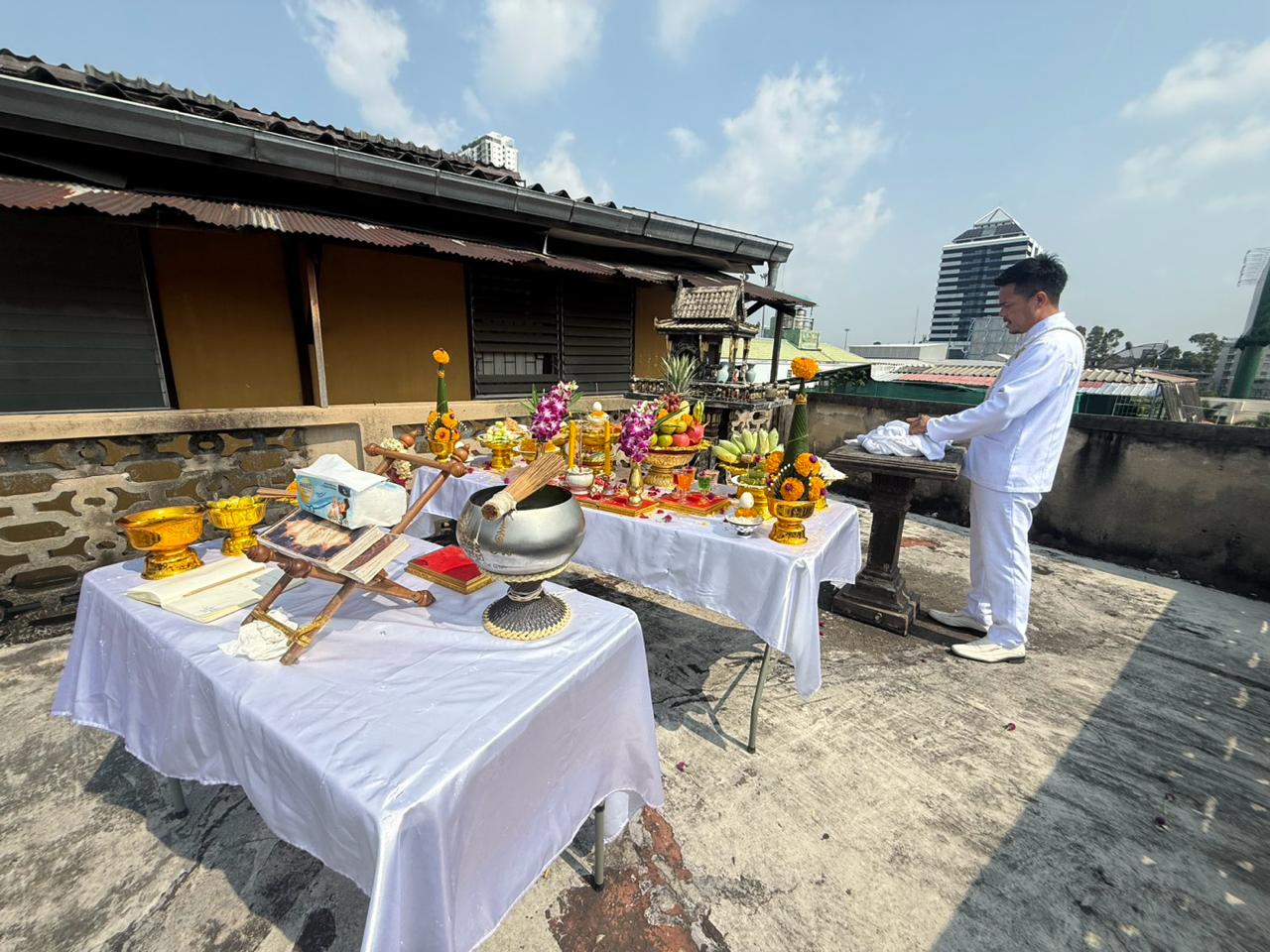
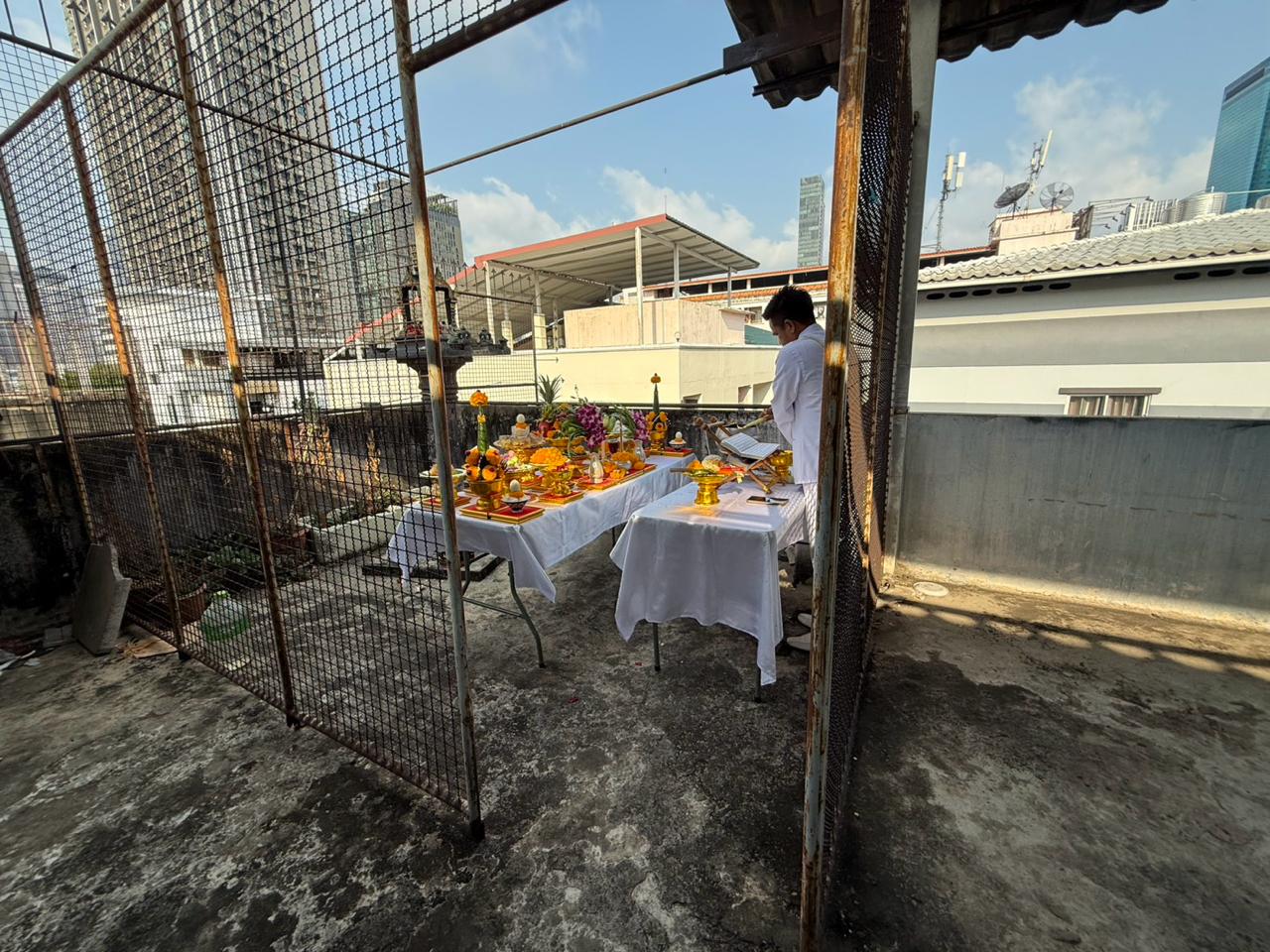
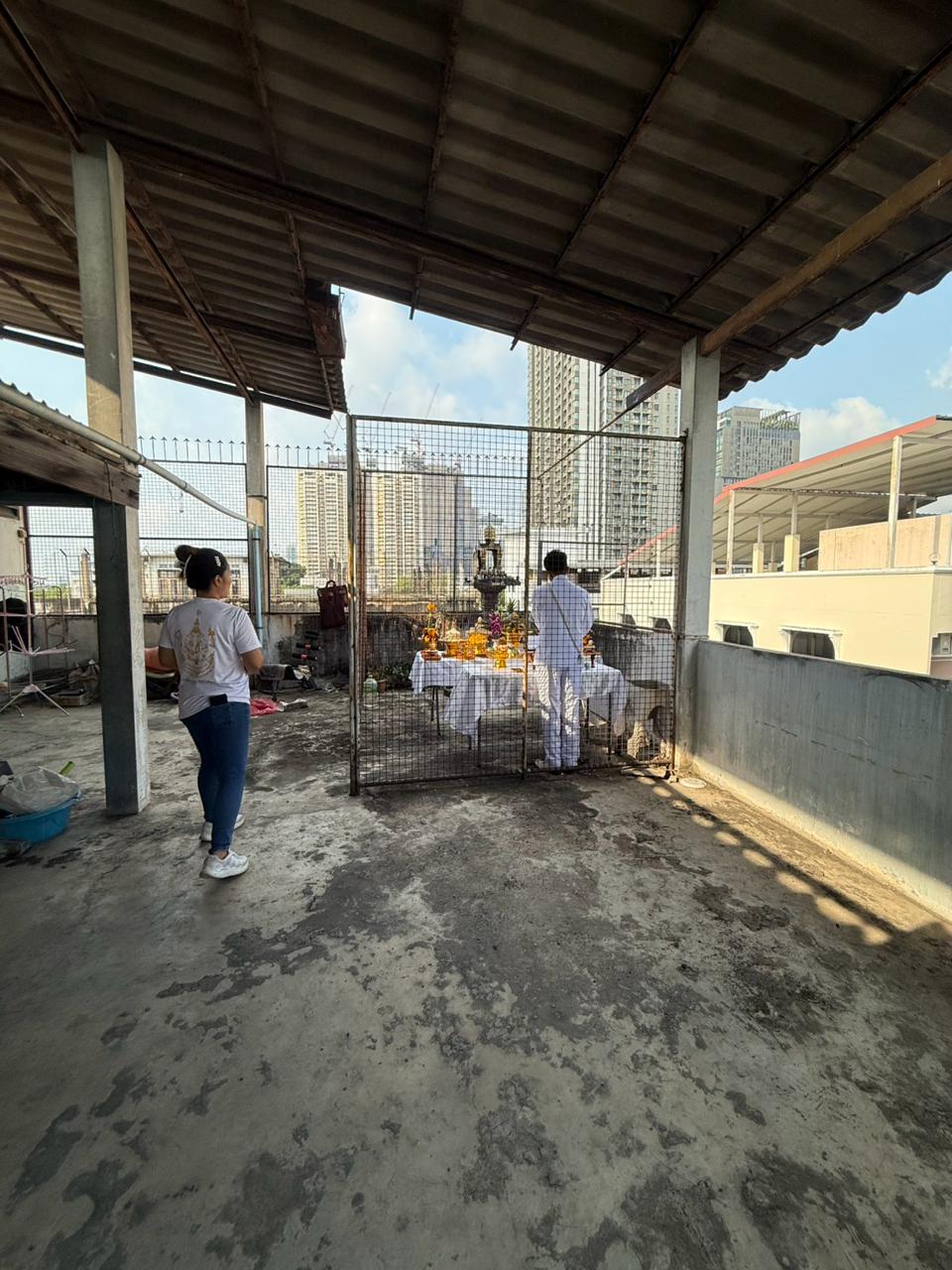
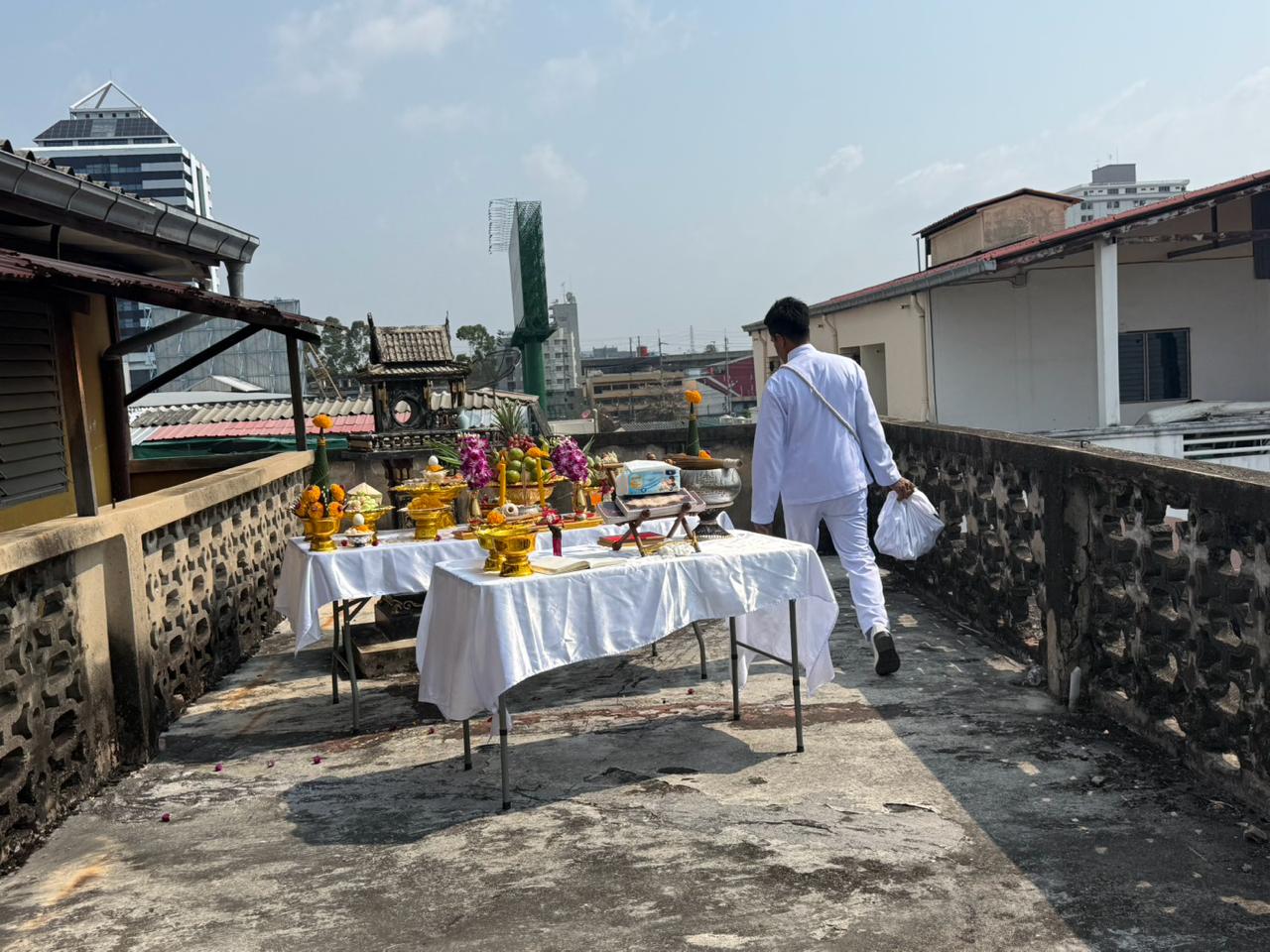
Before demolition and repair works could begin, a Thai priest was called to remove the two spirit houses from the site. It was a necessary first act: not construction yet, but permission for construction to start.
What happened that day
On 4 April, the rooftop held a different kind of preparation. White-covered tables were set with offerings, flowers, fruit, candles, books, and ritual objects. A Thai priest in white led the ceremony to remove the two spirit houses before the building entered its next phase of demolition and rebuilding.
The setting itself mattered: rough concrete, weathered rooftop edges, wire mesh, nearby towers, and within that worn frame, a careful act of clearing. Not a finished image. Not a design image. A threshold image.
01
The two spirit houses were formally removed before works began
02
A Thai priest was called to lead the ceremony on site
03
Offerings, flowers, fruit, candles, and prayer objects marked the ritual setup
04
This was the true beginning of the building’s physical transition
Image sequence
The rooftop before the work opened up.
Four frames from the ceremony that cleared the site before the first demolition and repair phase began.
Offerings in place.A compact ceremonial setup within a weathered urban rooftop frame.Witnessing the threshold.A quiet preparation moment before the ceremony was fully underway.After the rite.The same rooftop corridor, still ordinary, but already carrying a different status.Tools of the ceremony.Books, incense, flowers, fruit, and ritual objects marking the site’s first formal release.
Entry 01
14 May 2026 Facade study
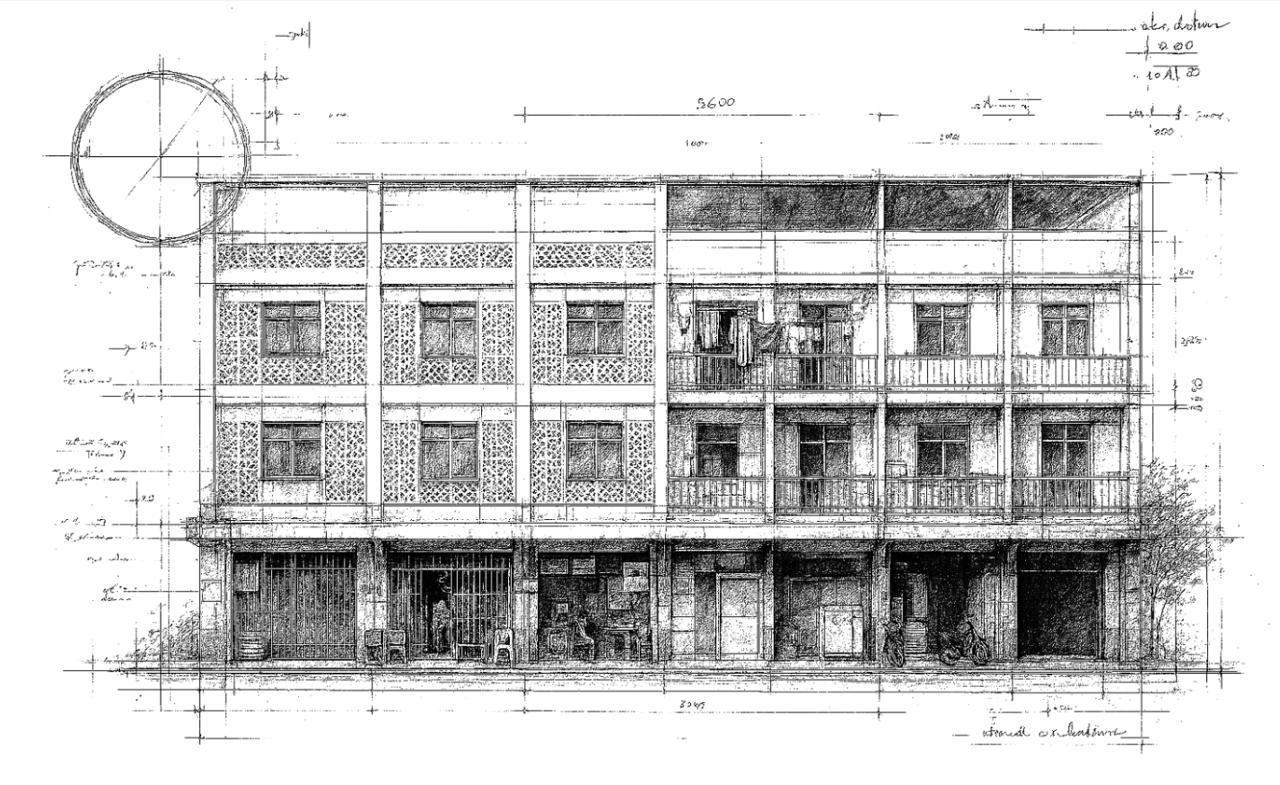
An architectural record of the building before its next identity settles.
This elevation drawing belongs in the journal because it documents the existing frontage as a real studied condition — not yet the renewed version, but the building as it has been read, measured, and understood before transformation.
Why it matters
The value of this drawing is not polish. It is proof of attention. The old frontage is being observed as a system of columns, openings, railings, shop bays, ventilation blocks, and lived-in street conditions rather than as a surface to simply cover over.
It also holds a different kind of memory: everyday life, hanging laundry, occupied thresholds, uneven bays, and the practical logic of how the building has been used over time. That record matters before the next layer of calm is built into it.
01
The drawing captures the facade as an existing condition, not an idealized redesign
02
Structural rhythm, balcony life, and ground-floor activity are all part of the building’s memory
03
This kind of record helps the renovation stay observant rather than generic
04
It belongs in the journal as process evidence, not as a marketing image
Stay Close
Follow the building as it comes to life.
These site updates are here to build trust through what is actually happening on site — slowly, visibly, and in order.